Showing posts with label Article. Show all posts

Sunday, 28 February 2016

Axior's Gnomes


The defining characteristic of Gnomes is their desire to learn.

They are typically about 3 feet tall, very curious, and can live to about 60 years old. Male Gnomes do grow facial hair. Female Gnomes can grow mustaches, although it is not typically fashionable for them to do so.

Gnomes revel in secrets, although they are lousy at keeping them. To them, secrets and knowledge are the most valuable currency, but when they are excited about something, they will usually drop hints and teases until they give it away.

The other thing that Gnomes really love is food; specifically the variety and quality of their food. Gnomish cuisine is famous for its quality, and because of their small size and therefore appetites, they can use exotic and expensive ingredients (because they only need to buy small amounts of it). They also love alcohol; good alcohol is worth more than gold to them. Alcohol affects them normally (unlike their Dwarven relatives).

Gnomes dabble with other intoxicants and hallucinogens. Magic mushrooms are strongly associated with Gnomes.

Gnomes are also known for having weird potions. This is mostly stereotyping, due to a popular series of stories involving a Gnomish alchemist (as a supporting character), who always has just the right potion for a situation; this varies from the mundane (healing potion), to the ridiculous (shark repellant).

There are two other famous stories involving Gnomes; in one they are basically Santa's elves (depending on who is telling the story, they may be happy working for him, or may be his slaves), and the in the other they are evil creatures that kidnap children.

The combination of their loves of food and secrets means that recipies are one of the most exchanged secrets among Gnomes.

Because of their size and nature, they are sometimes employed as spies. They typically do not last long, as they will often give themselves away. This means that a savvy employer will replace them before they know enough to give away anything important.

Gnomes, being small and not inclined to combat, are often treated badly. They are frequently abused or enslaved, occasionally kept as a stand-in for a lost child, or put to work doing industrial tasks. They do not typically earn any sort of title (as they make lousy knights), and are often just looked down upon by other races.

In order to be in a good place in society, Gnomes have learned to adapt. They tend to form tight-knit communities in cities, travel in groups, and carry knives. They typically distrust strangers, and are generally cowardly in unfamiliar situations, and so prefer to have strength of numbers wherever possible.

Gnomes often form gangs, initially to defend themselves, but they often just evolve into normal gangs given a few generations. Note that Gnomish gangs tend to be big fish in small ponds; against more cutthroat gangs in big cities, they don't usually cut it.

Knives carry some cultural significance to Gnomes, most notably, a marriage ritual among Gnomes is for spouses to exchange knives. This is mostly symbolic, but losing your spouse's knife is a big faux-pas. Losing knives in general is embarassing for a Gnome, though this doesn't extend to having them stolen from you or getting mugged, which is just unfortunate.

Gnomes in general get along well with Dwarves, Halflings, and Children. Dwarves tend to stick up for them, and their curious and intellectual nature makes them good compliments to the Dwarves. Gnomes are often employed by Dwarves to help figure out problems, or brainstorm solutions that they could not otherwise come up with.

Gnomes (being half-Dwarf) can be called on to continue a Line, although it does not fit their nature, and so it is often said that only a Dwarf can continue a line, and Gnomes are happy to let them.

Gnomes give birth normally, but have a short gestation period, only about 5 months. Twins are seen as being lucky; all Gnomish deities are twins, who usually represent opposites.

There are a few different places you might find Gnomes:
  • Gnomish Villages – these generally are backed by a Gnomish Mage or gang. They do well for themselves, as much as any other village.
  • As a minority in cities – typically downtrodden, but communities of Gnomes have been known to do well in some places.
  • In Dwarven towns – they fit in well with Dwarves, and they generally do not have to worry about themselves among Dwarves, so are free to pursue their own interests.
  • In the wild – these are often referred to as feral Gnomes; they live in the wild, and forage for food, or make mushroom patches in remote forests. They are masters of hiding, as the world is full of dangers. They typically only speak Gnomish
  • As travellers: Gnomes tend to travel in groups, or with other groups of travellers. A lone Gnome is either a madman, an outcast, or a Mage powerful enough to fend for himself.


Another point about Gnomes is that they love games. Their natural curiosity lends itself well to learning rules, figuring out interactions, and devising strategies. Most Gnomish communities have a handful of locally developed games, in addition to the ones found throughout the realm. Being the creator of a local, popular game makes you a local celebrity; expect gossip about possible rule changes and what you are planning to create next (Gnomes love even the possibility of secrets!).

Tuesday, 26 January 2016

Axior's Dwarves

The following is a piece I wrote up about Dwarves. I'm doing some world-building for a D&D campaign, so there might be a few more posts about the land of Axior. Without further ado, here are my notes about Dwarven culture:


The defining trait of Dwarves is their single-mindedness. A given Dwarf will choose a profession (called a “Line”), and work without deviation towards it for their entire lives. The oldest Dwarven child of each gender will inherit the Line of the correspondingly gendered parent, although all others are free to choose their own Lines.

As the name implies, a Line continues through generations, and a strong Lineage is a great honour among Dwarves. Due to the oldest-child-only inheritance though, Lines tend to be fairly short, and even a 4th generation Lineage is respectable.

Dwarves are typically humourless, emotionally flat, and lack sex-drive. They care little for appearances (other than beards), and lack creativity. The two great exceptions to these are:
  • If any of these traits are required for their Line. Because of their dedication, they will seemingly instinctively develop any required personality traits.
    • As a subnote, if a Dwarf does not think they will be able to complete their life's work in their lifetime, they will develop an incredible urge to procreate so that their heir may finish it. If their same-gendered first-born dies and their Line is broken without completing their life's work, they will fall into despair, or work madly with such a looming and literal deadline.
  • Or, if they are drunk. Intoxicated Dwarves are generally quite uproarious, horny, emotional, and free-thinking. This boost to creativity is what drives many Dwarves to drink, although alcohol often causes as many problems as it enables them to solve.

Alcohol is prevalent in Dwarven society; because of the aforementioned lack of sex-drive, Dwarven populations only dwindle without alcohol, so they have “evolved” to include some form of alcohol in all Dwarven societies.

A Dwarf will follow their line to all ends of the earth; it is not uncommon for Dwarves to:
  • Become hermits, producing whatever masterful works they have dedicated themselves to for its own sake
  • Leave Dwarven society to pursue their craft; this is most common for anything artistic, as they will find little audience or market for art and performances there
  • Create a single masterpiece in some obscure location; this may be a giant statue in the desert, an intricate dungeon beneath a wine-cellar, an epic mansion in the middle of a forest, or whatever
  • Create an enormous number of the same thing, far beyond any market's demand for them.
  • Beggar themselves when their Line is not profitable, or amass an unspent fortune when it is
  • Choose a life of crime for their Line. Almost every famous pirate whose name ends in “beard” is a Dwarf. Remember that Dwarves will aim to be the best at what they do.
Stereotypes about Dwarves mostly come from a few famous Dwarves and their Lines. This is mainly miners and warriors.

Dwarves who do not inherit a Line are referred to as Progenitors, Firsts, Primes, Forebearers, or Bears. Firsts is the most casual, and most commonly used, as Dwarves care little for formality (Dwarves often address each other based on their Lineage number, so calling someone a Second or Fifth is common). They typically spend most of their childhood trying a bit of everything, and seeing what sticks with them. If a Dwarf cannot find their Line, they will often fall into alcoholism, and such Dwarves are referred to as Lost (collectively, The Lost), but this is less common than you'd think. A Dwarf typically irons out what his Line will be throughout puberty.

If a Dwarf refuses to inherit their rightful Line, they are typically shunned, and often become Lost or outcasts, even if the take up another Line. This is quite rare, due to the social stigma.

Some Dwarves will try and continue a Line with someone other than the first-born (either a later sibling or an adopted child); this is most common when the first-born dies, especially for miscarriages. This is generally accepted, although their Lineage is spoken with some disdain, as it is not been truly “earned” in public opinion.

It is difficult to find a Line, and many Dwarves end up helping out other Dwarves (i.e. being assistants, apprentices, salesmen, etc.). This can create the awkward position where a Dwarf's Line has become obsolete, or cannot be done anymore due to the death of their master Dwarf. They may get another Dwarf to take up their master's mantle (occasionally forcefully), they may take it up themselves in some cases, or they may end up going insane; sweeping the floor of a long abandoned shop, or selling wares that do not exist.

Dwarven debts are carried through a Line, although note that any Firsts are free from these debts. This includes financial debts, debts of honour or other obligations, and prison sentences.

Dwarves are very proud, although the only two things they typically care about are their Beard, and their Line. Various styles of beard exist, and this is the one area where Dwarves will care about fashion. Both genders of Dwarf have beards, although there are different styles associated with each gender, although this can differ geographically and temporarily. In many cases, an exposed chin is a sign of femininity, although there are several distinctly masculine styles with a naked chin. In general, simpler Dwarves like simpler styles, and more urban Dwarves have more elaborate tastes.

A shaved face is a sign of shame or repentance for a Dwarf, depending if they were shaved by themselves or someone else. Many feuds were started by cutting a Dwarf's beard, and several peace treaties were signed because of a clean shaven one. Such feuds typically only last as long as it takes to grow the beard back, but if further cuts are made during that time, then things can get messy.


Thursday, 17 July 2014

Keeping Players in the Game

Keeping players in the game is a tricky task.

The first thing you need to avoid is player elimination. Knocking players out of the game is generally a bad thing, you can only really get away with this if it is both necessary to the game, and if the game is short enough that players don't mind waiting for the next round.

The next obstacle is logical elimination. This is where players can fall so far behind that they have no chance of winning. Even if they're technically in the game, if they have no hope of victory, they might as well not be playing. You need to allow players to have some method of catching up and making comebacks so that everyone can stay engaged. This is sometimes referred to as "rubberbanding"; where a player who gets too far away from the pack gets snapped back towards the median.

There are two forms of rubberbanding: you can either give people that have fallen behind an advantage, or you can impose a penalty on anyone who gets too far ahead. The latter method, I like to call "Blue Shelling" and I generally dislike it - it seems fundamentally wrong to punish the players for doing well.


Comeback Mechanisms should be a subtle thing, as you generally don't want to reward players for losing so much that they would prefer to be in last place. You generally want to avoid just handing them points, and instead give them small advantages that let them get their game plan back on track.

Once you have a game that allows all players to be strategically engaged (by not eliminating any players, logically or otherwise), you need to ensure that players can be engaged by the mechanics themselves. One of the worst offenders for this is long turns that only involve the current player. Players zone out, waiting for their own turn, and then take extra time to figure out what happened while they weren't paying attention.

There are a lot of different ways to combat this, such as:
  • The simplest method is to just have turns short enough to keep players from zoning out. If long turns are inevitable or unavoidable, consider reducing player count, so that it at least gets back around faster.
  • Having multiple players playing simultaneously. There are a variety of ways to do this; Scattergories, Bananagrams, and 7 Wonders are all good examples of simultaneous play.
  • Giving people things to do during their off-turns. 
    • In Risk, you roll defender dice when you are being attacked
    • Puerto Rico has everyone participate in whatever action is being taken
    • Kingdom Builder gives players enough information to start planning their next turn before it happens. 
    • Taboo has a player paying attention and buzzing out players who use any of the "taboo" words.
    • Even simple tasks can keep players engaged, giving players "busy work" can sometimes actually make it more engaging and fun.
  • Allowing player interaction such as Trade or other negotiations
  • Making whatever action the player is taking inherently interesting enough to keep players' attention. The most obvious example would be from games like Cranium or Charades, where players actually perform and do things. 
  • Making paying attention to the opponent's moves inherently important. A game like Mascarade is an excellent example, as if you don't pay attention, you'll have no idea what is going on.

All in all, there are a lot of things to consider to maximize player engagement. You not only have to keep them strategically engaged by letting everyone have a chance at victory, but also focussed on the game at hand, even when it isn't their turn.

Thursday, 3 April 2014

Fossil Updates

I've been doing some work lately to address the faults of Fossil. The basic concept was novel and fun, but the game was swingy, not deep enough, didn't scale well, and felt too short.

Here is a list of "patch notes" on the recent changes:


  • Increased the number of tiles. This has gone from 72 to 120. I have also rebalanced the tiles to include more monsters and rooms to keep things more interesting.

  • I have reworked the digging mechanic to scale better with more players. They now roll 1D6 per opponent, and take tiles equal to the lowest number rolled.

  • I have redone the monsters. I now use a deck of small monster cards that you can put on the tiles. This allows for a greater variety of monsters, as well as more detailed and interesting ones. It also solves the long-standing problem of how to represent monsters on the board (previously with ad-hoc dice or token representations). 

  • I have also rebalanced combat. The way it worked before was very all-or-nothing, and while fun, was not that interesting. I have changed it to a system I like calling "chip damage"; monsters now have an Attack stat that determines how much damage they deal, rather than the remainder of their health. This also opened up a lot of opportunity for more interesting monsters for the cards mentioned above.

  • The items have also been reworked quite heavily. They were very swingy before, cards like Mimic and Treasure Chest (which let you draw 2 and 3 treasure cards respectively) combined with high-value powerful-effect cards (like Boots of Travel, which gave +1 movement and was worth $3) could potentially give you $10 from a single lucky drop. All the most powerful items were reworked into "Abilities", which give powerful enhancements to your miners, but cannot be sold for money. In addition, the "draw extra treasure" cards have all been nerfed to give 1 fewer than before. In addition, many others have been reworked to be more useful. I still need to add more loot, but this has been a good start to the item reworks

  • I have also reworked the Miners, by adding Classes. You now start the game with 1 Scout, 2 Miners, and 1 Heavy. Scouts can move up to 5 spaces, but only have 2 Strength (which serves as HP/Carrying capacity). Miners can move 4, with 3 Strength. Heavies can only move 3, but have 4 Strengh, and get +1 damage in combat. On average, this has increased the speed of your workers by 1 space; which was also partially done to counteract the larger maps brought about by having more tiles.

I am quite happy with the rework thus far, and I look forward to continuing it, as these changes have been a huge step forward in addressing the issues facing the game. 

Thursday, 24 October 2013

Essential Dominion Articles

Core Strategy Articles:

Building the "First Game" Engine

A wonderful article that introduces players to the depth of strategy available in the wonderful world of Dominion. It takes a beginner level kingdom and adds an advanced level of strategy, backed up by simulation data and interesting writing. A must read for any aspiring Dominion player.

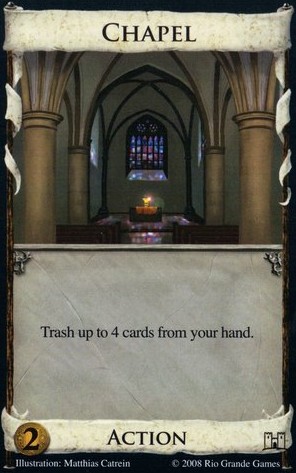
Featured Card: Chapel

A real eye opener for a new player. It really helps you understand the power of trashing and having a slim deck.

Featured Card: Laboratory

Another great featured card that helps to understand the basics of the game.

The Five Fundamental Deck Types

Consists of 5 articles on each of the deck types: Big Money, Slog, Engine, Rush, and Combo. This is a good feature for familiarizing yourself with some of the intermediate strategy to the game.


Important Featured Cards:

Featured Card: Jack of All Trades

Introduces the legendary DoubleJack strategy.

Featured Card: Ill-Gotten Gains

Another Hinterlands card that can change any board that it is on.

Featured Card: Rebuild

Rebuild is another game warpingly powerful card.


Other:

A Dominion Fan Card Creation Guide

This is for anyone aspiring to make fan cards. It outlines common mistakes and pitfalls for card designers, and gives a very good (and thorough) outline of what goes into designing and testing a card.


Thursday, 17 October 2013

Being your own Guinea Pig


One exceedingly common problem for board game designers is a lack of playtesters. If you are lucky, you have friends who are willing (or even enthusiastic) to play your games on a semi-regular basis, or some sort of game design circle that will play your game in exchange for you playing theirs.

Usually though, such arrangements are weekly at best, and having a week iteration time makes for slow progress. [In this context an iteration is one cycle of Playtest > Rework > Playtest].

It is often beneficial to play against yourself in order to test tweaks and variations - small or large - in order to get a feel for the effectiveness of your changes. Self testing should be the first line of defence when evaluating your game.

I can't even count the number of times I've had a idea for a game that sounds great on paper, but as soon as I went to try it, I lost all enthusiasm for it. This has happened for cards, turn structures, restrictions, rules, items - basically anything that it could happen for. Putting it to the simple self-test forces you to change your mindset, from designer to player - and ultimately what the player thinks is far more important.

It can also help you figure out what is too complicated or does not work within the confines of your game. It is far too easy to forget the restrictions of a board game and overcomplicate things. In a video game, you can add on complexity, and the computer will handle all of your variables in the background - in a board game, the players must do everything for themselves, and this can result in a drastically slower experience if you add on too many things.

It isn't a perfect solution, and there are several things that complicate playing against yourself:

  • Limited information is no longer limited. You know exactly what is in your opponent's hand, because you have seen it. To counter this, figure out the rational decision based on the information that each player should have; alternatively, make the decision at random if that is reasonable.
  • It becomes a lot harder to keep track of what each player is doing. It takes a lot more mental effort to keep track of what every player is doing, instead of just one. To compensate, you can cheat a bit; don't be afraid to write down each player's strategy, or counts of key things in the game. You can even look through decks (so long as you shuffle them back afterwards).
  • The metagame becomes irrelevant. This is probably the biggest problem for me; each player's strategy will always be based on what *I* think is the right move. My best way to compensate for this is to play an occasional game with a player I designate the "psychopath", who will commit to an unusual strategy and ignore my usual priorities. In addition, I try and pursue a different strategy with each player, though this is not always possible or practical based on the game.
  • Anything based on social interaction is completely irrelevant. This isn't usually an issue for me, based on the types of games I usually make, however, this may not be the case for you. The best advice I can give for a social game is to use the "random" method for decision making.
    • A useful statistic I can offer is that in The Resistance, where one team must deduce the identities of the other, the win rate should favour the team aiming to hide information, so that when played randomly, they should win 65-70% of the games. This is because human deduction is usually good enough to compensate for the difference. (I can't find the source for this, but this was based on a quote from the designer)


This method doesn't work for every game, but is a powerful tool that every designer should employ. It can greatly improve the speed of your development, and the quality of the playtesting sessions when playing with other people.


Thursday, 5 September 2013

DotA Board Game

A while ago, in a fit on inspiration, I designed a board game based on Defence of the Ancients (DotA). After several iterations, I had something playable and a pretty decent game.
It plays a lot like DotA; for the first few games, everything seems confusing, and one side will get stomped and not really understand why. However, after you get the basics, a whole new world of strategy opens up.

In terms of game mechanics, it is a mish-mash of things. It has bits of deck building, dare-I-call-it-worker-placement, RPGs, drafting, and turn based strategy. It is difficult to explain, as every aspect of it integrates into the others, so bear with me.

I am going to assume that, for purposes of this article, you have a basic understanding of DotA, or at least the MOBA genre (which includes games like League of Legends).

In this adaptation, there are only two players; each controlling all 5 of their team's heroes. Players draft their teams, and battle each other, earning levels and gold to enhance themselves along the way.

Physical Components
Let's start with what the game consists of. It has:
  • Hero Cards. At last count, there were 63 different heroes. Each is on an index card.
  • Counters, dice, markers, and other such stuff:
    • 10 location dice. These are used to indicate what each hero is doing each turn. There are 6 potential locations.
    • 50 experience tokens. These are used to keep track of each hero's level, and what abilities they have. I am using blue flat marbles for this.
    • A bunch of "depletion tokens". These are used to track how much mana a given hero has spent. 
    • A lot of damage dice. I actually use two types of dice, "single" damage dice, and "triple" damage dice. Heroes' HP is equal to 3x their strength, so most of the time, it is easier to just factor everything by 3 and track damage that way, with a different coloured die for any remainder damage.
    • Gold tracking dice. You may want to use D20s for this. Each player needs to keep track of how much gold they have. 
  • Cards:
    • Standard cards. Each player starts with a deck of 10 "strategy" cards. These are white-backed cards.
    • Standard unit cards. These are red-backed cards.
      • Each player has 2 creep cards, one of which is a "Front Creep".
      • Each player also has a double sided building card. One side is "Tower", the other is their Ancient.
    • Spell Cards. You gain these cards from your abilities. They are white-backed cards.
      • Standard Spell cards:
        • Slow
        • Stun
        • Snare
        • Nuke
        • Silence
        • Blink
        • Teleport
        • Illusion
      • Unique spell cards. Certain spells are represented by unique cards. They white-backed.
      • Spell creature cards. These are for creatures summoned by hero spells. They are red-backed.
    • Item cards. These represent what you can buy in the shop. 
      • Active items. These are white-backed, and are added to your deck.
      • Passive Items. These are yellow-backed. Each hero can equip one passive item.
      • Necronomite. Red-backed. The only creature summoned by an item.
  • Quick Reference Cards. These are pretty important. They are on index cards.

The Draft
As in DotA, there are many ways to draft a team. I prefer the Random Draft method for this. You can just as well adapt any other that suits you.

Take 20 heroes at random from the pile and lay them out. Randomly choose a player to pick first. You alternate picking heroes; however, do so in a 1-2-2-2-2-1 format (the first player picks one hero, then the second player picks two, etc).

Once you have your heroes, the game begins.

Heroes
Heroes are represented on index cards, and have the following information about them:
  • Name
  • Strength
  • Agility
  • Intelligence
  • Primary attribute
  • Ranged/Melee
  • Abilities
In addition, several attributes are calculated based on their stats.
Max HP is equal to 3x your Strength.
Initiative is equal to your Agility. This determines the sequence in which the hero attacks.
Intelligence determines mana. You have 1 mana per 3 intelligence (rounded up).
Their damage is equal to their primary attribute.

Abilities vary from hero to hero. Heroes can get up to level 5, and earn an ability each level. Note that heroes start at level 0. In most cases, there are 3 abilities, and 2 levels of stats available. Certain heroes have multiple levels of abilities, and certain heroes' abilities are differently structured, or do not have levels of stats. All abilities have a level requirement (often just level 1), and of those many heroes have "ultimate" abilities that they cannot get until they reach level 3.

In addition to the ability that heroes get every level, they also get +1 to their primary stat per level.

Let's take Shadow Fiend as an example;

Shadow Fiend - Ranged
Strength: 2
Agility: 4    (Primary)
Intelligence: 3
Abilities:
1:      +1 damage per level
1:      Nuke
3:      mmt: Deals 1 damage to all enemies per level
2, 4:  Stats

His first ability is a passive that gives him +1 damage per level that he has (in addition to the damage he gains from gaining his prime attribute every level).

His second ability is a "standard ability". There are several (I'll get into this later), but basically they all work the same way. They give the player a card of that type (each standard ability is interchangeable). They can use the ability normally, but when they use that card, they can use their ability at max initiative in combat (this is pretty important).

His third ability cannot be had until he reaches level 3. It costs 2 mana, and requires him to tap (essentially use his action for the turn. You do not physically tap them as you would magic cards.) It deals 1 damage per level of his to each enemy.

He can get 2 levels of stats, at character level 2 and 4. Levels of stats give +1 to each of his non-primary stats (in his case Strength and Intelligence).

Lanes/Locations
There are 6 potential places that your heroes can be:
1. Defensive Lane
2. Centre
3. Offlane
4. Jungle
5. Fountain
6. Respawning
Let's do these in descending order:

Respawning - the hero was killed last turn, and cannot participate this turn. When its turn comes, it will return from the dead, at the fountain.

Fountain - heroes at the fountain are fully healed, their mana is restored, and they can buy things if they so wish.

Jungle - fight a creep here. It is a source of gold and experience.

Offlane - If you have 1 hero here, gain 1 experience and 1 gold. If you have 2 heroes here, gain 2 experience and 2 gold. If you have 3 or more heroes here, gain 2 experience and 3 gold.

Centre - This is where the action happens. Each side gets a wave of creeps (a front and back creep), and you duke it out. Combat will be explained later.

Defensive Lane - Whoever wins the battle in centre has the opportunity (if they wish) to push into the opponent's side. You attack the tower (or Ancient if the tower is already down; note that you cannot do both in a single turn).

First Turn Sequence
The first turn works slightly different from the rest.
  1. Randomly assign the initiative token.
It is used to decide who goes first in various things.
  1. Make purchases (2 gold)
You start the game with 2 gold to spend on your team. (I will list the items available for purchase later.)
  1. Assign Lanes
Starting with the player with the initiative token, alternate assigning lanes to your heroes. Place a location die on a hero to indicate his destination. (see above for locations)
  1. Resolve locations in descending order
See above for information on each location. Also note that both players resolve their locations in the same phase.
  1. Spend experience
This seems like as good a place as any to explain how experience works.

Experience must go to a hero with the lowest level at the location at which it was earned. Each hero can only gain 1 level per turn. Experience is earned by killing things; all heroes give 1 exp; as well, many creep and other units do as well (it is specified in their bounty).

Experience is not spent until this phase, after all combat has concluded. 
  1. Draw a hand
Draw a new hand; draw until you have cards in hand equal to the number of living heroes you have. (You start the game with an empty hand for the first turn)
  1. Pass the initiative token

Regular Turn Sequence
  1. Assign Lanes
  2. Play strategy cards
Players alternate playing strategy cards, starting with the player with the initiative token.
  1. Resolve locations in descending order
  2. Spend Experience
  3. Draw a new hand
Discard any cards remaining in your hand, then draw back up to the number of living heroes you have.
  1. Pass the initiative token

Conclusion

I have gone over most of the mechanics of the game; in future articles, I will go over the cards, heroes, and items available.

Thursday, 29 August 2013

Distant Colonies Update

After the Death of Hawker, I have been thinking up some new ideas for cards. The following are completely untested, but the latest cards to be considered for my set:

A bit of an oddball, Aztec Charm is a virtual copper that comes back every other turn. It is great for slogs. It also combos well with Mystic and Scrying Pool. It can also be used to delay your reshuffle for cards like Counting House or Shaman.

What's interesting about it, is that the duration effect is not optional. If you want the coin, you have to put it back on your deck. I had also considered an effect that would let you give it to other players on buy, as its effect can turn it into a copper that keeps coming back, but it seemed too complicated.


Metallurgist is a pretty cool card. It seems like it will do well for setting up Tactician decks, or even for winning Minion/Hunting Party splits.


I have also updated a few cards:

Flower Meadow received a minor tweak; it is now worth an additional 1 VP per Duke in your deck. Prior to this, Dukes were utterly dead on a board with them. Now, they work mostly the same as they did before.

I redid Investment. Previously, it was +1 buy and +2 coin on buy. This made it crazy strong with cards like Woodcutter (+4 coin) or Baron (+6 coin), and relatively worthless by itself. This change helps make it less worthless without other +buy, and less overpowered for cards with both +coin and +buy.


Thursday, 15 August 2013

Dungeon Keeper 3 - Heroes

These have been fairly extensively redone, so I figured they deserved their own article.

Basic Human Units

    Citizen
The basic human. Weak, and performs basic labour for the heroes. They can be upgraded to a caste once they gain their first level. Once a caste unit reaches level 6, they are upgraded again, to the higher level of their caste.

    Infantry
Infantry are the standard fighter for heroes. They are the basic level of the Fighter caste. They are reasonably strong, and require a Training Room.

    Knight
Knights are upgraded infantry. They are tougher than Infantry, but vulnerable to lightning. They hate Black Knights.

    Monk
Monks are the basic level of the Holy caste. They are fairly weak, but super-effective against undead. They require a Church.

    Cleric
Clerics are upgraded monks. They gain a healing ability, and are tougher than monks.

    Wizard
Wizards are the back-line support for heroes. They are the basic level of the magic caste. They use fireballs, while your Warlocks use Ice magic.

    Mage
Mages are upgraded wizards. They gain a lightning attack, and can gain a more powerful fire attack.

    Thief
Thieves are the basic level of the Rogue caste. They can gain the ability to open your doors, and can detect traps, and avoid triggering many traps. They will also steal from your treasuries if you let them.

    Spy
Spies are upgraded thieves. They gain the ability to disable traps, and can even become invisible. They also gain a damage upgrade.

    Crossbowman
The basic level of the Ranged caste. They do more damage than Wizards, and serve as support units.

    Archer
Archers do (slightly) more damage than Crossbowmen, and have a better rate of fire. In addition, they also gain the Fire Arrow ability.

Elven Units

    Elf
Elves are the introductory level for Elves in the same way that Citizens are for humans. They do not do work as citizens do, instead relying on Citizens or Dwarves to do that. All Elves have the ability to detect traps, and can avoid triggering many traps. In addition, all Elves hate Dark Elves. Elves can

    Elven Archer
They are powerful support units; more powerful than human Archers. They have the ability to make critical hits for bonus damage. They gain the Knives ability at level 6.

    Elven Warrior
Elven warriors are powerful but fragile fighters. They have a chance to evade attacks, and are resistant to all magic. They have no abilities.

    Fairy
Fairies are small flying creatures with an impressive arsenal of magic. Their abilities are (in order that they gain them): Chill, Heal, Lightning, and Freeze.

Dwarven Units

    Dwarf
The paltry dwarf; these do the grunt work of most kingdoms. They are weak and vulnerable, and hate greenskins. They may however, upgrade into Dwarven Warriors, abandoning their pickaxes for true axes.

    Dwarven Warrior
A slightly stouter companion to basic dwarves, warriors can work in the workshop, and are much stronger than basic dwarves (though that isn't saying much). They can gain a Throwing Axe ability. They are still fairly weak.

Other Units

    Giant
Giants serve a similar role to the Monster-class units of Dungeon Keepers. They require their special Giant Gates to come in, and have an independent population cap from the rest of the Heroic force. They are as tough as tough gets, and very strong in addition. They resist fire and poison, and can work in a workshop. They can gain Throw and Slam abilities, that utilize their mass to disrupt enemy lines.

    Seraphim
Seraphim are holy warriors, summoned by the Seraphim Feather miracle. They are immune to all damage sources other than Horny or other Seraphim. They require mana to sustain themselves, and have several magical attacks to bolster their impressive damage.

Nobility
 Nobility are typically the bosses of each level.

    Lord
The most common Noble, they lead the heroic forces fearlessly. Their bravery inspires those around them, in the form of their Rally ability.

    Elven Lord
Elven lords are similar to regular lords, except that they are elves, and have better damage.

    Prince
Princes are the young heirs to the king. They are not as strong as lords, but are typically better protected. They also resist all forms of magic.

    Archmage
Archmagi are powerful magic users. They are weaker than Lords, but their impressive magicks more than compensate for their paltry physical strength.

    High Cleric
A spiritual leader, they are similar to the Archmagi, except that they have holy magics instead of elemental ones.

    General
A high ranked officer to the King. They wield hammers, and can work in workshops. They are tougher than regular lords.

    King
The final boss of the game. He has some of the highest stats in the game, and is resistant to all magic.

Thursday, 8 August 2013

Dungeon Keeper 3 - Playing as Heroes

In some scenarios (such as skirmish battles), you may wish to play as the goodly Heroes. They play very differently from a Keeper. For starters, they cannot slap their citizens, and cannot pick them up either.

Heroes share all of the following rooms with Keepers:
  • Hatchery, Library, Training Room, Wooden Bridge, Treasury, Stone Bridge, Workshop, Guard Room, Casino, Laboratory
They also share these rooms, but do not use them in the same way:
  • Lair – Heroes will not be dragged back to their lairs like creatures are
  • Prison – will not create skeletons for Heroes
  • Torture Chamber – cannot be used by Heroes
  • Combat Pit – cannot be used by Heroes, allows humans to train until level 6
  • Graveyard – does not attract vampires for Heroes, grants mana for corpses instead
  • Temple – not used except by Darkwort; cannot use sacrifices, does not pray there

In addition, there are several unique Human buildings and rooms:
  • Hero Gate, Dwarf Gate, Giant Gate – are pre-placed like portals, Keepers capture them by capturing all adjacent tiles, while Heroes need only capture them like regular territory, to attract in citizens
  • Church – heroes pray here, 5x5 or larger holds an artifact to use miracles (miracles are the heroic equivalent of spells)
  • Hero Gateway – heroes gather here to teleport to hero gates; 3x3

There are also some traps unique to heroes:
  • Gargoyle trap – only emerges at night time, becomes a demon and actively fights back against nearby enemies (can only be built outdoors)
  • Sunstone – emits daylight to the immediate area around it; useful for warding off many creatures


Heroes are also controlled differently than dungeon creatures. Heroes have a special 'caste' menu instead of spells, which they can use to assign castes to citizens (or elves of at least level 3) who are at least level 1. In addition, in place of 'slaps', they place an Orders Banner, which rallies nearby units to it. Right clicking on a Hero Gate will summon units from the Hero Gateway.

Conscription and Heroic Mechanics:

Heroes make armies out of their citizens. Once a citizen has reached level one, they may train in a combat discipline of their choosing. Not all heroes use this system, but the bulk of heroic forces are trained in this manner. A human of a particular caste gets promoted at level 6, at which time they get stronger, more so than a regular level. Note that in order to get promoted, they must have the requirements for their second tier class.

Because Heroes do not use Portals, they get their new citizens from Hero Gates. Every Hero Gate attracts up to 10 citizens. Hero Gates may also be used offensively, allowing you to warp your forces from the Hero Gateway to a Hero Gate of your choice.

Hero Gates are built like 4x4 fixed size rooms, although the gates themselves are only 2x2. In order for them to be captured by a Keeper, the Keeper must capture all of its surrounding spaces. Once captured, the room is destroyed, as Keepers may not use Hero Gates.

Elves, Dwarves, and Giants each have their own set of requirements. Elves require the more expensive Elves Lair to be attracted in, while Dwarves require the Dwarven Gate, and Giants require Giant Gates.

Dwarven Gates work much like a Hero Gate except that it attracts in up to 4 Dwarves, only requires a 3x3 space (it is a 1x1 gate), and multiple Gates can be used to teleport Dwarves between them. On an unrelated note, Dwarves are the only Heroes that can capture territory.

Giant Gates bring in Giants the same way Hero Gates bring in Humans and Elves. Each will draw in up to two Giants. Giant Gates cannot be used to warp forces from a Hero Gateway or to teleport forces like a Dwarven Gate. They are the same size as Hero Gates, but have a distinctive appearance so as not to be confused with them.

Miracles

Humans have an equivalent of spells known as Miracles. A 5x5 church allows them to hold a single artifact. Every artifact performs a certain miracle.
  • Seraphim Feather – summons a seraphim. Maximum 1 per feather.
  • Manifest Stone – drains all mana from the realm
Non-campaign artifacts
  • Phoenix Tears – restores health to all of your conscious citizens
  • Philosopher's Stone – grants gold based on the emptiness of your treasury
  • Sword of Truth – lets you cast Divine Wrath anywhere you can see

Tuesday, 6 August 2013

Featured Card: Shaman


Shaman is my latest card. I wanted to add a few more potion cards, as they work best when there are several available, so increasing the number of them seems like a good idea. It is essentially a very unique peddler variant.

It works best in engine decks, allowing you essentially a wild card of whatever you need. Its other main strength is chaining. What makes it really unique however, is how it interacts with triggering reshuffles. It makes it advantageous to leave an engine payload card in your discard after each shuffle.

I think it has significant opportunity cost, and may still be too weak, but it is a really cool card with a lot of unique interactions.

Works With:

  • Most +coin cards, in particular:
    • Militia, Goons - great as payload cards; they turn every shaman into terminal gold + attack
    • Harvest, Navigator - discards cards for it to retrieve
    • Councillor and Scavenger - give you your pick of cards to retrieve; lets you use your entire shaman stack
  • Conspirator
  • Scheme - Shaman's best friend. Top deck a Shaman, grab a chain of Shamans, then Scheme. Repeat.
  • Golem - play a golem to grab your shamans, use your shamans to play the golems it passes over. Also great for having something else to spend your potions on.
  • Cycling:  Cellar, Warehouse - Allows you to better control your reshuffle, and gives more cards in the discard for Shaman to claim.
  • Catacombs, Oracle - They becomes a lot stronger by allowing you to keep a card from the first set of  cards and still getting the second. Everything for Cycling applies as well
  • Advisor and Envoy - So long as they aren't discarding treasures, these becomes a lot more reliable with Shaman.
Has Cool Interactions With:

  • Gravedigger - gain back actions for you to use.
  • Treasure Map
  • Inn - Cycling, as well as potentially delaying a shuffle, keeping your payload cards available to your shaman.
  • Fortune Teller - I can't even wrap my head around their interactions. Do they synergize with each other, or counter each other? 

    Conflicts With:
    • Faster games - probably the only reason Rebuild it doesn't work with it. Shaman decks take a while to get going. Like most Alchemy cards, it can be very strong in the right circumstances, or ignorable in others.

    Thursday, 1 August 2013

    Dungeon Keeper 3 - Campaign Plot

    1. Lord Illman –
    Once a mighty champion who led legions of men, time has not been kind to him. His forces have been spent and he has weakened, leaving him with nothing except his loyalty to the light.
    Keeper, he will be the weak link that allows you to break into this Kingdom. Crush him

    1. Lord Gelbard –
    Having long hidden behind the forces of others, he has opted to fill his ranks with wizards instead of warriors.
    While they are powerful support, they are weak and frail in combat. Keeper, take the fight to him and he will surely fall.
    +Library
    (+Training Room)

    1. Lord Craneburt –
    A cowardly hero who locks himself away from battle, behind moats and gates. This is not all he has locked away Keeper, as he has taken prisoner a host of Dregs who would prove to be useful if rescued. Capture his briges and prisons and use his cowardly tactics against him.
    +Prison
    +Wooden Bridge
    (+Treasury)

    1. Lord Markson –
    Leads the dwarven kingdom of Ironhill. It is a rich and populous community, but its magma rivers make it difficult to navigate.
    If you wish to succeed here Keeper, you will have to learn the secrets of building Stone Bridges, and you will have to make the most of a limited force.
    +Stone Bridge

    1. General Gearfort –
    Commands the great Dwarven forges in this area. His forces are vast and powerful, but are quite divided by the region's unforgiving terrain. Only the native Dwarves can move around easily and they are a paltry threat at most.
    Keeper, you must strike at the heart of Gearfort, swiftly and terribly so that he cannot gather his forces to retaliate.
    +Workshop

    1. Lord Gabriel –
    Stands in your way now; previously he was useful as a barrier between yourself and Keeper Elderbean, as it stands now, he is only a nuisance.
    His kingdom sits beside a great underground lake, which should prove attractive to several waterborne races. He has fortified his walls, but has left himself vulnerable from the water.
    Use the speed and power of the Nagini to outmaneuver this naive warrior; attack him from where he least expects it.

    1. Lord Construm –
    A veteran from the days of Inquisition, he uses information as a weapon. His forces are great, and he is well hidden in the tunnels of this region.
    You must beat him at his own game Keeper, interrogate his agents and discover the true path through his maze, for a myraid of traps and ambushes await down every false path.
    +Torture Chamber

    "The torture chamber; look how Construm has left it unused and abandoned. Teach him its true purpose Keeper! He has let its implements rust with his neglect. He will lament that these tools do not get any less painful as they rust."

    1. Keeper Elderbean –
    Stubborn and greedy, he is eyeing your growing tally of lands and waiting for his opportunity to strike. He is no fool, and has already secured every portal in this realm.
    You only have a small contingent of your best creatures; use them to great effect Keeper; steal the portals and resources he has hoarded, use them against him and banish him back to oblivion!

    1. Keeper Underglass –
    The young and naive son of the late Elderbean. Enraged by the loss of his father, he has abandoned his carefully established defences in his haste for revenge.
    Use his hate against him Keeper; create deadly traps for him as he blindly rushes at you, and once he has exhausted his forces, retaliate with all of your strength and cunning.
    +Laboritory

    1. Lord Yorick –
    A hopeless slave to the forces of light, Yorick has been granted a regiment of Knights to command.
    The twisted Dark Knight should be a match for its richeous cousin, they are every bit as fearless and strong, and will train tirelessly for you. Use the Combat Pit to train your forces to exceed the goodly lord of this land.
    +Combat Pit

    1. Lord Highcrest –
    Stands as the guardian to the gate to the surface, high and mighty. Be wary of the effects of sunlight on your creatures and dungeon Keeper.
    You will be vulnerable during the day, which is when you will need to set up a careful defence. Once night falls though Keeper, you will need to strike hard and fast, for if he survives the night, he will surely return stronger than before.
    +Guard Room

    1. Lord Conright –
    Maintains control of this land by controlling its resources. Gold is scarce, and he has thieves and spies to steal away any wealth not under his control.
    You must establish an economy in order to beat him Keeper. Use magic, sell off unnecessary rooms or traps, steal, rob your captives, cheat your creatures out of their wages; use any means necessary to gather the gold necessary to establish yourself Keeper. Once your forces are sufficent, raid his treasuries, and finally show him the strength of your resourcefulness.
    +Casino

    1. Keeper Agony –
    The well-established Keeper of this sun-filled realm; Agony is not to be underestimated, as he is a master of evil.
    In order to defeat him Keeper, we must use his dark nature against him. Use the daytime to establish yourself, and prepare for an invasion after nightfall.
    His attack promises to be terrible, but no so terrible as you can be Keeper.
    (+Beholder)

    1. Lord Sunford –
    Leads a colony of Elves. Though frail, they are powerful foes nonetheless, and the sun pervades this land, leaving you little refuge for your dungeon.
    You will require all of your craft here Keeper, use what you have to deadly effect and cut down the overconfident Lord Sunford
    (+Succubus)

    1. High Cleric Redblade –
    A richeous defender of the land and persecutor of the undead. He is well defended in his fortress, but his strength of conviction shall prove to be his weakness.
    Gather a force of undead Skeletons to lure him out. Against his holy Clerics, they stand no chance, but your other forces should seize the opportunity to ambush him and end his richeous ways.

    1. High Cleric Montford –
    Holds this realm securely, as he commands legions of men, and it has no Dark Portals for you to use.
    Instead, you must use your small contingent force wisely, and capture the Graveyard to summons legions of undead Vampires and their subservient Ghouls and turn the fallen against the fair Montford.
    +Graveyard
    (+Dragon)

    1. High Cleric Righton –
    The last of these troublesome High Clerics, he possesses great wealth thanks to the rare gem seams that lie within his realm.
    He has spared no expense in the defence of his castle, so I want you to enjoy cracking this oyster open to reveal its prize.

    1. General Millsbold –
    Commands a powerful but young territory. Its inhabitants are inexperienced and untrained, making them prime targets for you keeper.
    You must strike quickly though, as General Millsbold is strong and will surely form a worthy force from the populace if given enough time.

    1. Lord Nightingale –
    A good friend of Prince Darkwort, that proximity to royal decadence has made him a coward. You must act quickly, as Lord Nightingale will flee at the first sign of danger.
    You must find him and stop him before he can escape; interrogate as many prisoners as necessary, and be careful to conceal your dungeon, lest he notice you and disappear.

    1. Prince Darkwort –
    The youngest and most troubled son of the King, young Darkwort is charged with protecting the Dark Temple. His dark nature has prompted him to use the Temple which has granted him the allegiance of several Dark Angels.
    You must not kill the Angels, we dare not antagonize them. Should you capture the Temple, their allegiance will falter, and defeating Darkwort should be easy from there.
    +Dark Temple
    (+Fallen Angel)

    1. Prince Malwest –
    The King's favourite son, he has been assigned a large force to defend this realm. Young and foolhardy, he intends to use it in a direct attack against you.
    Establish a strong defence Keeper, and be wary of the Hero Gates. You will be attacked by wave after wave of heroic forces, followed by an attack led by the Prince himself.
    (+Horny)

    1. Archmage Nazareth –
    The King's oldest and wisest advisor, he leads a council of Magi as well as an order of Knights. In his land are several mana vaults, which will serve you well.
    Keeper, the time has come for you to call upon our greatest champion: Horny. He is unstoppable in battle, and will make short work of the castle's defences.

    1. Prince Albian –
    Commands a force of Elves, and is in possession of a holy artifact that would allow him to summon a contingent of Seraphim to aid him.
    Do not allow this to happen Keeper. The ritual cannot be completed until his mana reserves are sufficent, and you must ensure that this never happens. Seraphim are richeous pests, and their presence would make things difficult here.

    1. General Steelcraft –
    The King's most trusted General, Steelcraft commands a mob of Giants who operate his mighty Workshop. His kingdom is filled with trecherous terrain; rivers of magma and a Beholder's labyrinth.
    His forces are powerful, his defences impenetrable – it will take all of your vicious wit to outflank and outmaneuver this worthy foe.

    1. Keeper Oderus –
    A selfish and twisted fiend, Oderus keeps a pair of Succubi as personal attendants. Keeper, his realm is vast and his temper foul.
    His ego is his weakness however, and a timely delivery of tribute will appease him, buying you the time you need to prepare your attack. Strike when he least expects it, and cut his decadent heart from this realm.

    1. Keeper Illumian –
    The oldest and craftiest among the three brother Keepers, Illumian favours the Arachneus huntress to fill his dungeons. In addition, he also has powerful legions of undead. He preys on a nearby community, who have started fighting back with their Monks.
    Keeper, convert these holy men to your cause and use them against Illumian. Their effectiveness against his undead minions should be enough to tip the scales in your favour.

    1. Lord Pixfort –
    Famed for being the only man to tame a Dragon, Lord Pixfort has long been a banner of hope for his people. Their hope is their strength Keeper, and it is this you must take away from them.
    So long as their spirits are high, their numbers are endless; you must best their Dragon and convert their followers to break their spirits and leave them ripe to conquer.

    1. Prince Manifest –
    Possesses a powerful artifact that he named – in all his infinite creativity – the Manifest Stone. It saps the mana from the land, depriving you of the precious resource.
    Your traps will falter, your imps will perish, and spellcasting will be impossible whenever he invokes the stone. You must rely on your minions to overcome Manifest's forces and destroy him and his artifact Keeper.

    1. Prince Milbert –
    A shy and timid prince, he is kept under lock and key by his father the King. Protected by a brute squad of Giants, a company of Knights, a temple of Clerics, a school of Magi, as well as every other man spared by his father.
    While it is an impressive force you are up against Keeper, it has no leader, as Prince Milbert is but a snivelling child. You must exploit its disarray to penetrate these defences and leave King Mightford without an heir.

    1. King Mightford –
    Having brought ruin to his kingdom, you must now face the great King himself. His forces are unmatched, his defences unparalleled, his strength and resources unlike anything you have faced before.
    He keeps a pair of Seraphim on hand, who will prove a powerful obstacle for you.
    Do not fear him Keeper, for while it promises to be an impressive last stand, you have proven your strength and wickedness time and again to me.

    You shall overcome the last stand of Highbold and bury the land in shadows. You need only pry the crown from the cold, dead fingers of King Mightford.

    Thursday, 25 July 2013

    Dungeon Keeper 3 Design

    With War for the Overworld under development, I figured that now was as good a time as any to reveal my old plans for a Dungeon Keeper sequel.

    I didn't change anything too drastically, I basically wanted to keep the feel of Dungeon Keeper 2 but with updated graphics and controls, and perhaps rebalancing a few mechanics along the way.

    Let's start with creatures, and work our way through things.

    Creature Levels
    Creature levels are now rated from 0 to 9. Level 0 and 9 creatures show their level as their rank (see below)

    In addition, creatures are now ranked by level:
    • Level 0-2 creatures appear as rank <
    • Level 3-5 creatures appear as rank <<
    • Level 6-8 creatures appear as rank <<<
    • Level 9 creatures appear as rank *
    You can choose to view your creature levels as ranks, numbers, or the default combination (numbers except for 0 and 9) (note: look at the < ranks sideways)


    Creatures gain experience in proportion to how many hits they get in. Note that healing type spells also gain experience.

    They gain abilities based on what rank they are. Abilities can come at levels 0, 3, 6, and 9.

    Non-Combat Skills
    NCSes are a particular creature's method of gaining experience for an activity other than fighting or training. Imps for example gain experience for doing work around the dungeon, as you wouldn't really expect them to fight.
    Non-combat skills can only gain experience up to level 6 for most creatures. Imps can still gain a full compliment of levels without ever seeing battle, but they are an exceptional case.

    Health Flowers
    Each of your creatures has a health flower, which displays their current health, level, and experience to next level. There are six 'petals' around the outside which represent the creature's health. The first indicates that it is alive, the second that it is conscious, the third through sixth represent whether it has at least 25%, 50%, 75%, and 100% health. The when on the first and second petals, it will flash when it is nearly going down to the next level (either being knocked out or dying).
    When a creature levels up, there is a sound effect and a special effect for their health flower.

    Bestiary
    I tweaked the bestiary a bit; I have added notes about significant changes. I have much more detailed notes, and this is basically a summary. I have divided creatures into classes, which I will explain as we go.

    Zero Population (summoned)
    These do not use up any supply cap, and either subsist on mana, or are otherwise limited in their population.
    • Imp

    Imps are weak to sunlight. They are otherwise unchanged.
    • Spider
    Spiders are the spawn of Arachneus (see below). They are weak with moderate damage, and tend to leave spiderwebs everywhere. They cannot cross water, and will not set off most traps. Their population is limited to 5 per Arachneus. They are animals, and therefore cannot train, but gain experience over time.
    • Horned Reaper
    Horny. He is back, and as angry as ever.

    Zero Population (undead)
    Undead populations are limited mainly by the supply of bodies, and the size of the rooms that produce them.
    • Skeleton
    Basically unchanged, they now have magic resistance.
    • Vampire
    Their abilities are tweaked slightly, their special abilities can be cast not just while possessed, and are gained as regular abilities. They also have the Raise Dead ability, which turns the fallen into Ghoul servants.
    • Ghoul
    Ghouls are the slaves of Vampires. They will lose health over time, which can only be replenished by feasting on the fallen. Anything they bring down will come back as a Ghoul. So long as they have Vampires to serve, they will never be unhappy.

    One Population (minion)
    These lesser minions can serve your dungeon in greater numbers, but are generally weaker than creatures.
    • Turtle
    Turtles are a new race. They are weak, animal-type minions. They are natural swimmers, and only need water and a lair to be attracted to your dungeon. They have a chance of spawning as Red Turtles, who can also swim in lava. Like Spiders, they cannot train, but gain experience over time.
    • Goblin
    Goblins are largely unchanged, except that they are now weak to sunlight.
    • Dire Wolf / Hellhound
    Dire Wolves serve as low level scouts. Once they reach level 3, they turn into Hellhounds. Hellhounds have better stats and abilities, and a different appearance. As animals, they cannot train, but gain experience over time, with bonus experience for scouting.

    Two Population (creatures)
    The common species you see in a dungeon.
    • Warlock
    His basic attack is now Ice Bolt, both to differentiate him from Hero Wizards, as well as just to be cool. It has a slow effect. They also gain experience from studying.
    • Salamander
    Basically unchanged, except that they now have a rival race: the Naga. Having one race will deter the other from joining your dungeon; in addition, both races hate each other and will become unhappy if exposed to each other.
    • Dreg
    Basically just a renamed Rogue. This was for theme, as they are the dregs of society. They gain experience from stealing and exploring.
    • Troll
    Trolls were tweaked slightly, their regeneration is enhanced, as well, they have a weakness to fire and sunlight. They gain experience from crafting.
    • Dark Elf
    Dark Elves mainly just needed to be rebalanced, as they were weak as hell in DK2. In addition, they now gain experience from guarding. They now have a weakness to sunlight.
    • Black Knight
    They now have a weakness to lightning, but are otherwise unchanged.
    • Mistress
    Slightly tweaked, I have removed their most annoying habit of torturing themselves. They will however, assist in the torture of anything you put in the torture chamber, and will gain experience for doing so.
    • Bile Demon
    They are now immune to poison, but otherwise unchanged.
    • Naga
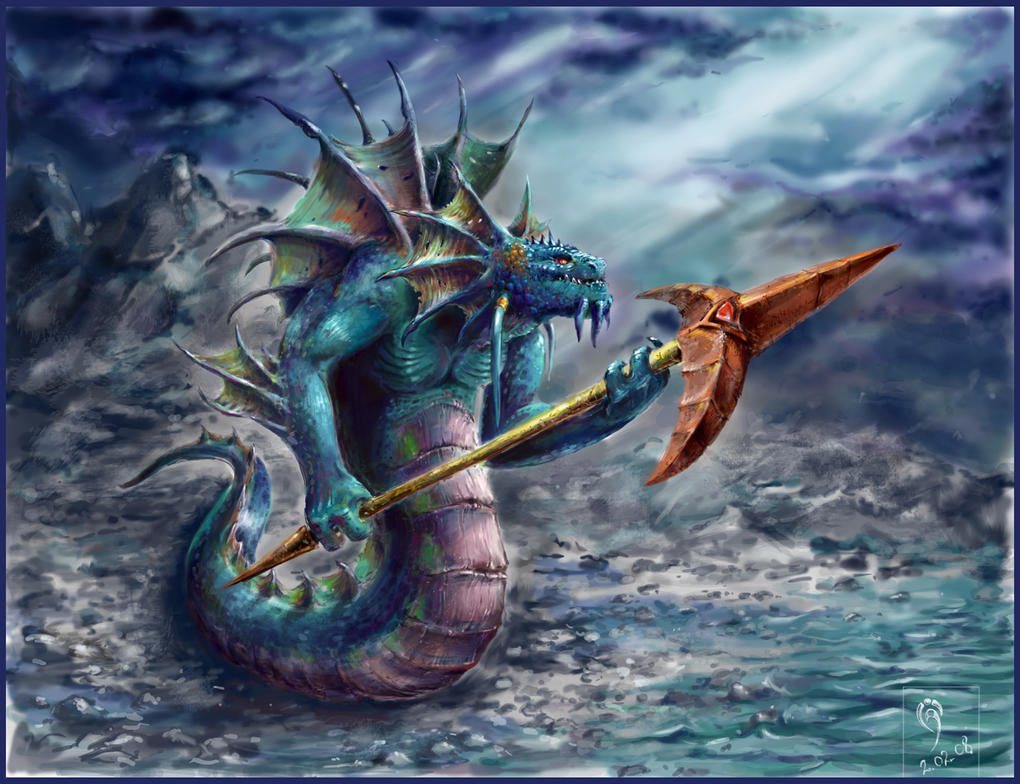
    A new race. They are a race of fierce Snake-Men, similar in appearance to the Naga from Warcraft 3. They are a water-oriented race, able to swim through shallow and deep water quickly. They are attracted by the Training Room, and are fairly strong warriors. They have no abilities.

    They are a rival race to Salamanders. Having any Naga will deter Salamanders from joining your dungeon, and vice versa. 

    5 Population (monsters)
    These are the centrepieces of your dark armies, with very particular requirements that you must fulfill to attract them.
    • Dark Angel
    Largely the same as before. They gain experience for prayer and research.
    • Arachnus
    An adaptation of the late-introduced Maiden of the Nest from DK2. I felt that they didn't fit well as rank-and-file minions, and instead deserved to be monster class.

    Abilities:
    Spawn - create a Spider minion. They can have up to 5 each.
    Venomous Spines - a ranged poison attack. It will cripple whatever it hits.
    Ensnare - prevents the target from moving or attacking. 

    They will conduct research, and can gain experience for it. They require a large laboratory (see below), a private lair (3x3 with no inhabitants) as well as having all the traps researched.
    • Beholder
    A powerful magic using monster. They have no basic attack, but powerful magic at their disposal.

    Abilities:
    Firebomb - a large fiery explosion.
    Hailstorm - deals cold damage over time in an area
    Forked Lightning - damages and stuns several enemies
    Miasma - poisons everything nearby

    They require a private lair, a large library, and all the spells to be researched. They can study, and will gain experience for it.
    • Dragon
    Dragons are massive, powerful creatures; second only to Horny in power. They are belligerent, greedy, and expensive to keep around; but ultimately a worthwhile investment.

    Abilities:
    Fire Breath

    Dragons require a private lair, a large treasury, and for you to have at least 100,000 gold in the bank. They are attracted by wealth.

    As animals, they cannot train, but gain experience over time. In addition, they will sometimes eat your lesser creatures, and gain experience for it.
    • Succubus

    Succubi are like elite Mistresses, although the two should not really be confused. They are physically the weakest of the monsters, but have a powerful attack, and regain health from damaging their enemies.

    Abilities:
    Drain - slows the target's movement and attack speeds, reduces their damage, and prevents them from using abilities.
    Convert - converts the target to serve you temporarily.

    Succubi require a large torture chamber, and are attracted by the sounds of screaming. They will torture victims like Mistresses, and will gain experience from it.


    The Laboratory
    The laboratory is a new room to come to Dungeon Keeper 3. It is used to research traps in the same way that the library is used to research spells. Its furniture should be mainly glass vials, brains in jars, and various props that wouldn't feel out of place in Frankenstein.
    Furniture is put on the every other perimeter tile, and every other central tile. Each piece of furniture allows one additional researcher, and increases capacity of traps blueprints by 2.

    Sunlight, Daytime, and the Surface World
    In maps that are not underground, the time of day is important. During the day, the surface world is lit up with sunlight. Several of your creatures have an aversion to sunlight, including greenskins, dark elves, imps, and the undead.

    The surface world and the underground are divided by special tiles known as Cave entrances. They bottleneck to one tile, but cannot have a door built over them. Outside the cave, lies fertile meadows, lush gardens, trickling streams, and happy peasants – disgusting. Inside them is the dank dungeons we are so familiar with and have come to love.

    Random Stuff
    Just random things I thought up while doing this. 
    • Torture Chamber – conversion is made much more efficient with the assistant of a Mistress or Succubus (succubi are even better than mistresses)
    • Library – upgrading spells now takes up space on shelves
    • Levels now run from 0 to 9 rather than 1 to 10
    • Some water is now considered "Deep" water, it is darker blue and cannot be crossed except by bridges, swimmers, or fliers
    • You may slap webs to get rid of them
    • A wounded dungeon heart has a reduced capacity for mana
    • As you capture territory, negative environmental effects start happenin
      • evil critters will spawn instead of good ones, water becomes tainted, plants wither
    • You can elect to build a room on undug rock, or unclaimed dirt, which will prioritize capturing territory
    • Treasury: 3k central, 1k outer, 3k reinforced wall outer
    • Fleeing icon – purple vertical swishy stripes or a skull maybe?
    • Any free imps are summoned automatically at dungeon heart
    • Single use traps cannot be attacked like regular traps, only triggered
    • "Keeper, all of your creatures are happy. Are you sure that you're being evil enough?"
    • Possessed creatures look distinctive – possibly black smoke pouring out from their eyes
    • New spell: eclipse (600 mana) blots out the sun in a large area
    • All spells need cooldowns
    • Hydra Trap – fires fireballs in each of four directions
    • Gargoyle Trap – comes alive and fights
    • Bridges are built in lines rather than like regular square rooms
    • You can't build rooms that would trap a creature, instead the area will be marked and friendly units will leave (unless they are defending it from hostiles)
    • Your evil hand illuminates the area around it with light that only you can see
    • Units are slowed (40%?) while poisoned
    • You may select (left click) certain areas to force your imps not to do that task – e.g. capture enemy territory, replace furniture – such areas are indicated by being lit up red
      • Alternatively, Imps will only capture territory that you designate them to
    • Gem seams should have a limit (~60k)
    • Unhappy and angry creatures have improved attack speed (10-30%)
    • Population counter in the UI?
    • Critter List:
      • Good
        • Butterfly
        • Dragonfly
        • Firefly
        • White Dove
        • Rabbit
        • Squirrel
        • Crab
        • Pigeon
      • Evil
        • Bat
        • Rat
        • Raven/Crow
        • Centipede
        • Snail
        • Lizard
        • Frog
        • Beetle
        • Snake

    I will probably do another article later about other changes (the heroes have some significant changes coming, as well as an outline for the campaign).