Showing posts with label Distant Colonies. Show all posts

Thursday, 13 February 2014

Playtest Report - Tinker (and Shaman)

I was able to get some testing in on Distant Colonies, and I played the following kingdom:


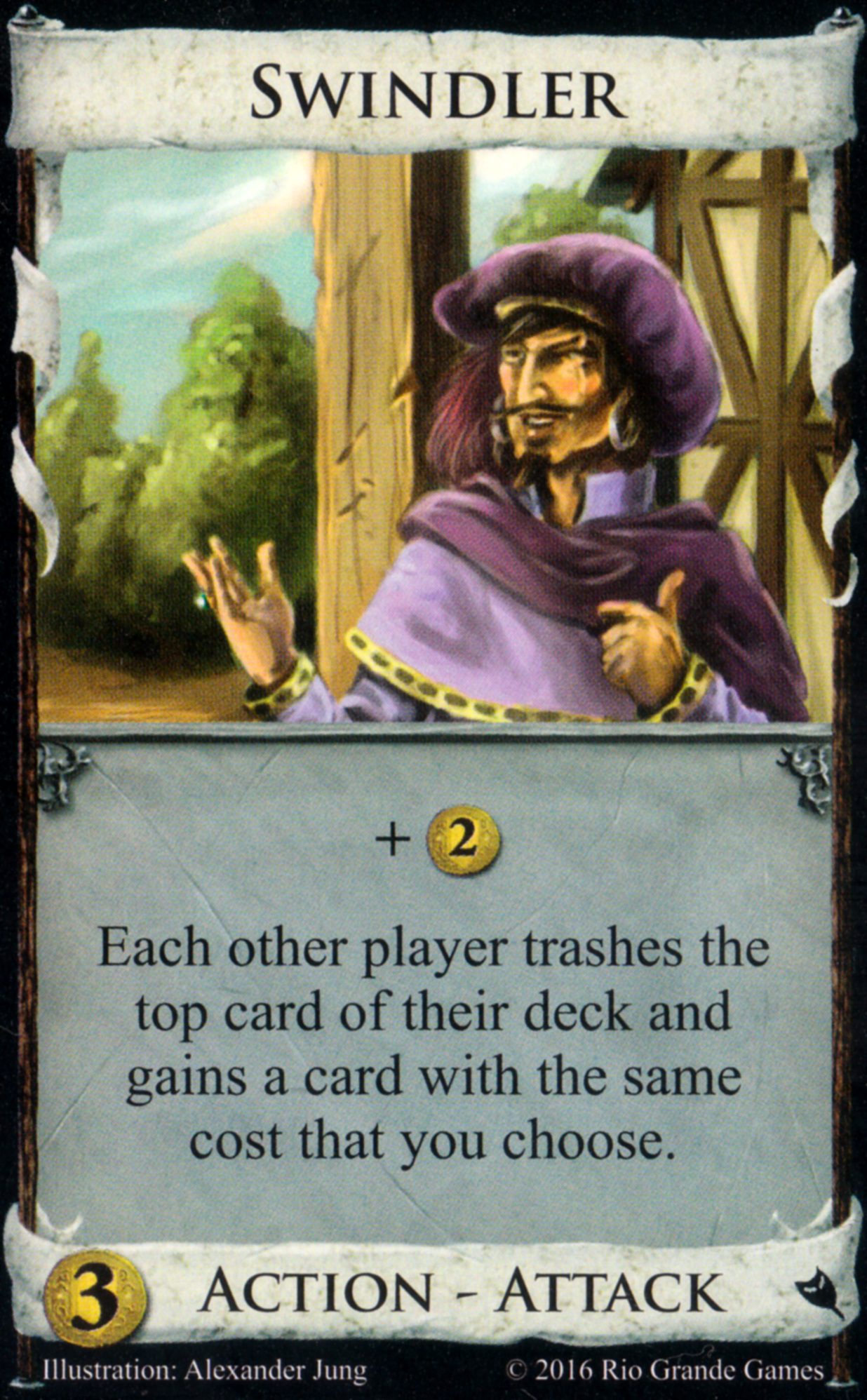
My intent was to test Tinker, and see if it was a reasonable concept. This seemed like a good board for it, as it had lots of similar cost cards, and even some 2 cost ones to swap out estates for. It even has tinker's evil twin: Swindler.

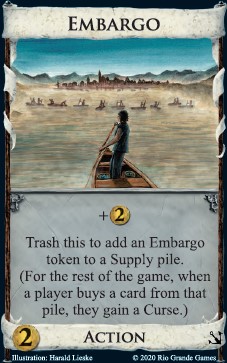
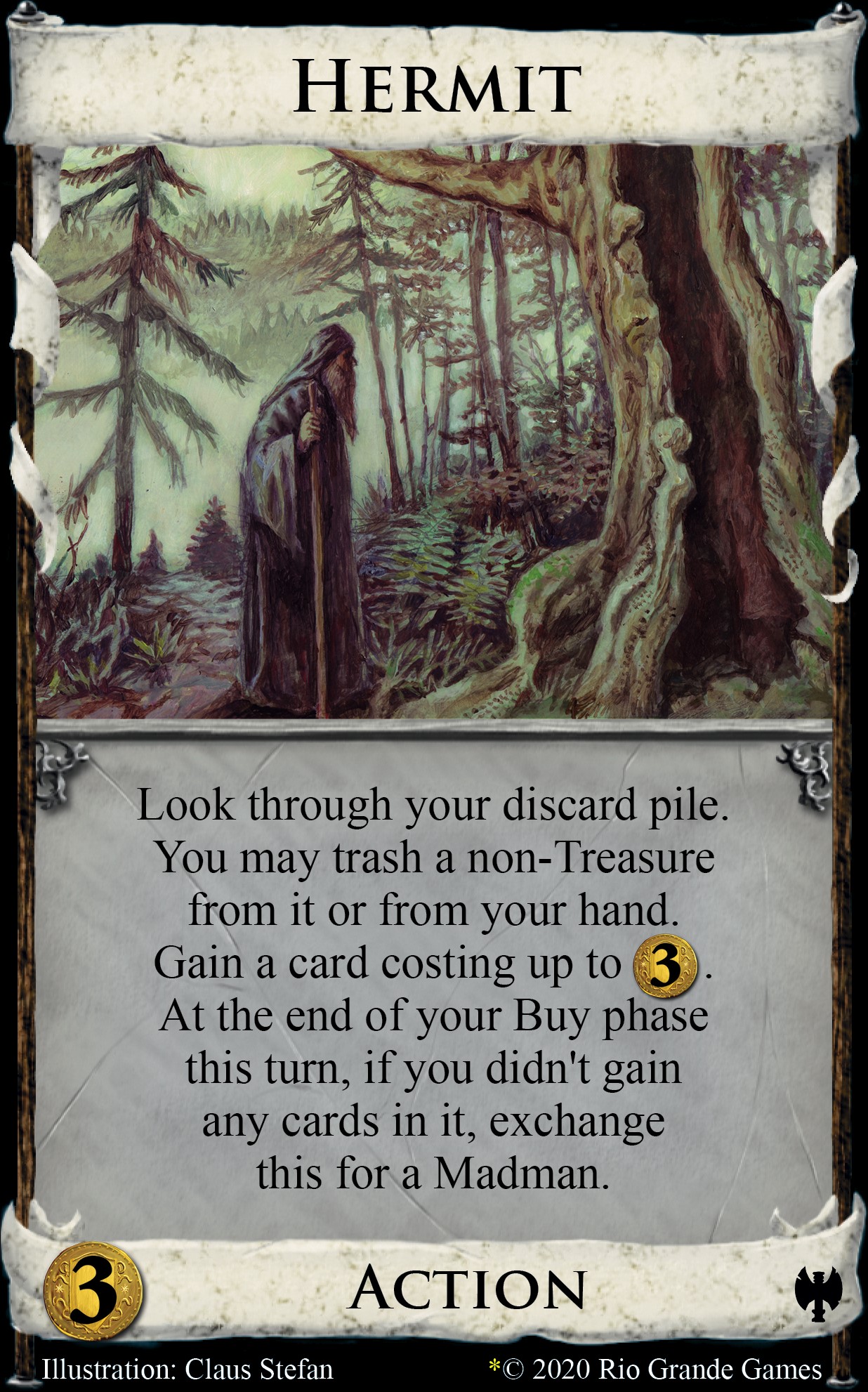
I opened Swindler/Tinker; in the hopes of colliding Tinker with an estate to make an Embargo, and using Swindler to start polluting my opponent's deck. I wanted to embargo the treasures, as unhindered BM should beat this deck. In the end, it was a very close game, with the Tinker deck narrowly beating a Hermit-BM strategy.

I feel like I have a reasonable handle on how to use Tinker now, and what his strengths and weaknesses are:

Works With:
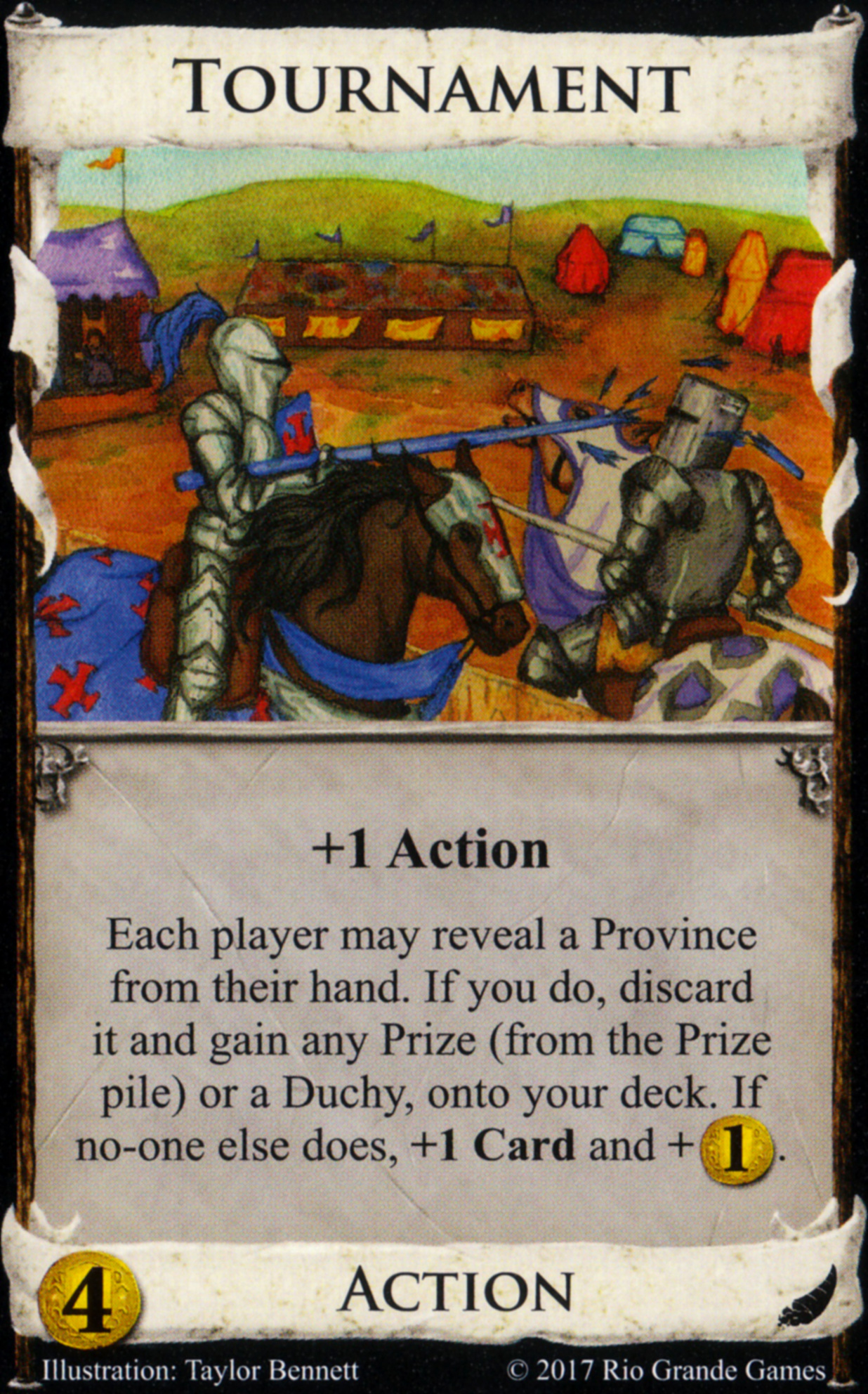
  • Strategically timed cards (Smugglers, Counting House, Tournament, Potion to a lesser extent)
  • Engines, especially draw-your-deck engines and megaturn engines
  • Tactician
  • Cards at similar price points
  • Good $2 cards (for turning Estates into)
  • Draw-up-to cards
  • Limited use cards (Sea Hag, Chapel)
  • Cards that benefit from being trashed (Rats, Catacombs, Squire, etc.)
  • It is useful for cleaning up curses
Conflicts With:
  • Silver
  • Lack of powerful drawing power
Ultimately, Tinker has a lot of uses, but it is a fairly weak card. It is essentially a dead card in your hand, and in most cases is not useful until at least the mid game. In order to get it reliably paired up with cards you want to exchange, you need quite a bit of drawing power; a lot in fact. Drawing most or all of your deck is probably a good idea.

In most cases, it would be faster and easier to just buy what you want in the first place, rather than use Tinker to swap cards for what you want. Barring really good $2 cards on the board, or trading coppers for Ruins in a Scrying pool deck, you will almost always be slowed by down by Tinker. Use it wisely and it can help you, but buy it carelessly and you will suffer for it.


Thursday, 30 January 2014

Distant Colonies - Tinker


Tinker is a concept I have had in my head for some time now; it has a few variations, but the concept stays the same of being able to exchange cards tactically.

Its value as an opener depends on the board; if there is a good 2 cost card (and it is not a shelters game), it is great to exchange your estates for them.

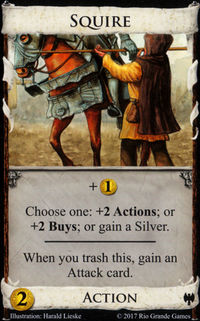
In the midgame, it can be useful to swap out engine parts in order to have an ideal amount of +action vs +cards in any given hand. It is also useful for swapping out cards whose usefulness has expired or diminished. (Sea Hag, Chapel, etc) or cards whose benefit occurs on buy/gain (IGG, Inn), or just any card that benefits from being trashed (Squire, Rats, Catacombs, Fortress).

In the late game, it can be used to swap cards for Duchies (or Platinum/Peddler for Provinces), or maybe just deplete piles by trashing and exchanging.

It is definitely a card I want to play around with; it seems to have a bunch of interesting uses. I actually just thought of something interesting; use it with fortress to gain the entire stack of tinkers at once. Whether you are massing up cards, or just piling out, it potentially puts the entire stack in your deck.

Thursday, 23 January 2014

Playtest Report - Tariff

Tariff plays pretty much exactly the way I wanted it to. It was designed as a combination of Harvest and Tribute, and performs that duty pretty much to a tee. In an engine, you can almost count on it giving at least +1 action along with up to +3 other things.

I picked a random kingdom that included Tariff, and I rather liked it:


It has a lot of interesting card interactions; I think City was probably the only card that I didn't end up using in my test games, as there isn't really enough time to empty a stack to make them worthwhile. Platinum and Colony are optional, though I think I preferred the board without them (though maybe that's when I should have gone for City!).


Tuesday, 3 September 2013

Distant Colonies Playtest Report

After a bit of playtesting, I wanted to update how things were going in Distant Colonies. I'll give a card-by-card report for the ones I got around to using.

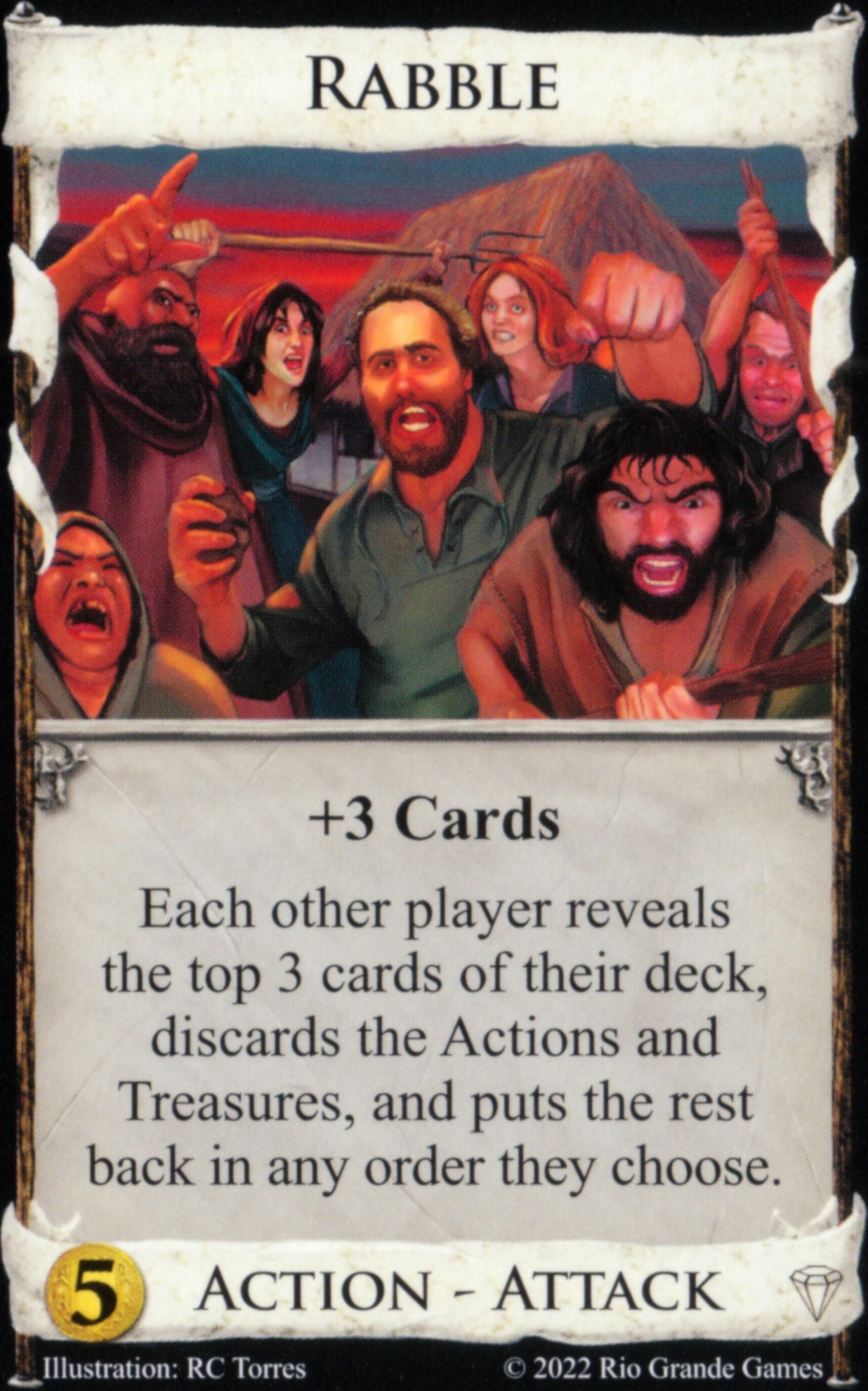
To put it simply, this card is absolutely bonkers. I played a game where it comboed ridiculously well with Rabble, and utterly stomped. It may have just been a lucky combo, so further testing is required. I am considering bumping this to a $5 cost.

I think this card is exactly where I want it to be. It does everything I want it to, in exactly the way I want it to.

Almoner is pretty fun to play with. It generates interesting decisions, and allows you to develop a strategy based on the differences in your decks. I am actually considering reducing the cost to $2; its main effect cannot stack, so it being amassable isn't an issue, and opening it in a 5/2 split shouldn't put that player at an overwhelming advantage. The general philosophy on pricing is to make it as cheap as possible, so this change follows that principle.

I want to play more with Curio Stand. In the games I played with it, it didn't really work as a key card, and didn't get much play. When it was used however, I really liked having it.

I liked this one. It can be a star in the right circumstances, and it can help out a lot of decks in subtle ways. It takes some thought to use correctly. I am pretty happy with how it is now.

I didn't play with the Alchemy ones (as I don't own the physical Alchemy or potions), so no new information here. I am still considering tweaking these, though I want playtest data first.

Pretty awesome. I like how this card works; you can use it as a silver that gets you two more silver - up until when the pile runs out - then everything goes bust, and your deck is swimming in junk cards. I had fun with it the games where I had it.

Bookkeeper is probably the ultimate trap card. You can get an early province very quickly, simply by clearing out your starting estates (or shelters) and buying one extra copper. However, greening hurts a Bookkeeper deck much, much more than a regular money deck.

I may be judging it harshly, as it was up against Swindler, which is a pretty hard counter. Swindler adds junk and removes coppers. One of Bookkeeper's key weaknesses is the lack of +buy, so amassing coppers is difficult. It also didn't help that on two occasions, it managed to swindle a Bookkeeper for a Moneylender.

It is hard to tell if this card needs significant rework, or is exactly right. It seems too difficult to integrate into a wider strategy, so it may be that the cultist-esque play-from-hand effect is replaced with a generic +1 action, though that may have cascading balance effects.

Additional testing is needed.

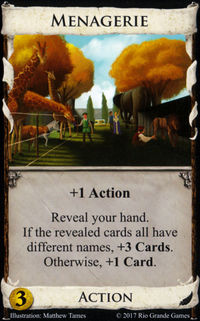
This card feels great to use. It has a very similar application to Menagerie, though with slightly different nuances. I like it; my only concern is its similarity to its Cornucopian cousin.

Did not get a chance to try it. No new info here.

I was reasonably happy with how this card played. I actually ended up using a trash-for-benefit card on it a couple of times, and I think it is a reasonable penalty; I don't want it to be too harsh in case it gets hit by a Swindler/Knight/Saboteur.

Played it. liked it. I didn't get extensive enough use of this to be for sure, but I think this card is where it should be.

As a side note (and not at all related to my testing): this card is basically a counter to Rebuild. It is cheap enough to amass, and will probably be worth at least 4 VP by game end.

I think I am going to scrap this card. I didn't actually do any testing for it, but I lost all enthusiasm for it once I saw a kingdom with it in it.

When I tried this card out, it was very weak. In most cases, you were much better off just buying the other $5 card, and skipping Metallurgist entirely.

I still like the concept though, so I will have to come up with some ways to buff it. I have a few variants in mind; possible additions:

  • Give +X cards. This should help it to connect to treasure better, as well as making it useful in a hand without silver or gold.
  • Gain 1 or 2 silver when you play it. This helps to propel it along, and ensures a constant supply of silver for it to consume.
  • Reduce the cost, possibly in conjunction with some of the other buffs. By having it not compete with the $5 cost cards it is trying to gain, it should help it become a more desirable option. I'd prefer not to go this route though.
  • Allow it to trash coppers as well, though for no additional benefit. It helps it fit thematically with Forge, and gives it an alternate use. It pretty sharply shifts the feel of the card, so it isn't something I'd jump in with just yet.
  • Remove the no victory cards clause. This is something I'd rather not do, as it makes it too swingy, to potentially cash in your BM deck for several Dutchies in the final rounds on a lucky hand. 

Thursday, 29 August 2013

Distant Colonies Update

After the Death of Hawker, I have been thinking up some new ideas for cards. The following are completely untested, but the latest cards to be considered for my set:

A bit of an oddball, Aztec Charm is a virtual copper that comes back every other turn. It is great for slogs. It also combos well with Mystic and Scrying Pool. It can also be used to delay your reshuffle for cards like Counting House or Shaman.

What's interesting about it, is that the duration effect is not optional. If you want the coin, you have to put it back on your deck. I had also considered an effect that would let you give it to other players on buy, as its effect can turn it into a copper that keeps coming back, but it seemed too complicated.


Metallurgist is a pretty cool card. It seems like it will do well for setting up Tactician decks, or even for winning Minion/Hunting Party splits.


I have also updated a few cards:

Flower Meadow received a minor tweak; it is now worth an additional 1 VP per Duke in your deck. Prior to this, Dukes were utterly dead on a board with them. Now, they work mostly the same as they did before.

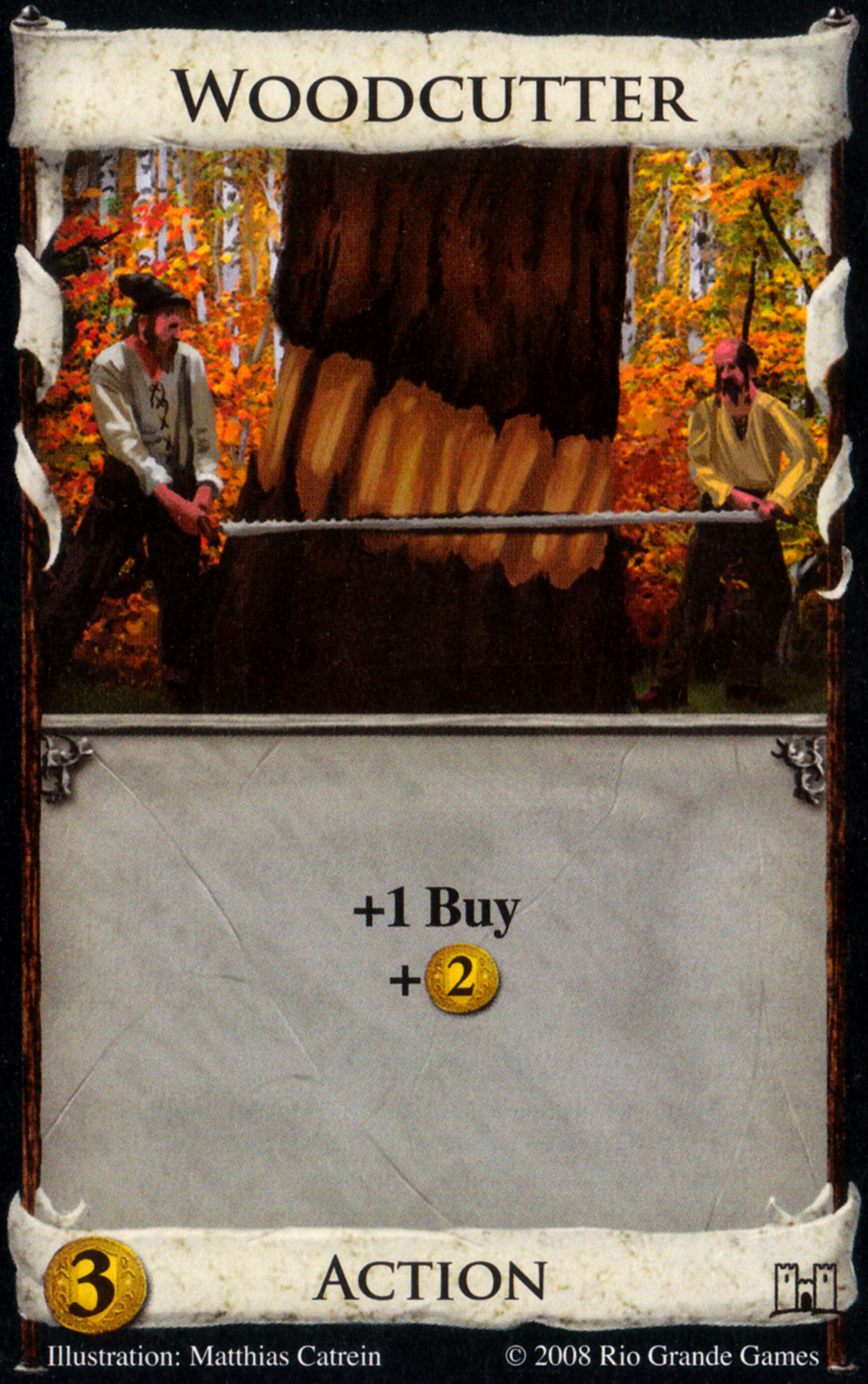
I redid Investment. Previously, it was +1 buy and +2 coin on buy. This made it crazy strong with cards like Woodcutter (+4 coin) or Baron (+6 coin), and relatively worthless by itself. This change helps make it less worthless without other +buy, and less overpowered for cards with both +coin and +buy.


Tuesday, 27 August 2013

Distant Colonies: The Death of a Salesman


I have recently decided to scrap one of my cards from the Distant Colonies set. It is an interesting card, but I feel that there is a card that delivers on this concept better that already exists. Strange as it may sound, this 2-cost cantrip is being usurped by a 5 cost terminal because they share a very similar role.


The original idea behind Hawker was to create interesting decisions around making extra buys or not. Everything about the card was based on that; it was designed as a 2 cost mainly so that buying multiple copies was not difficult (similar to other massable cards like Fool's Gold). It was a cantrip so that having too many would not be a bad thing. It gave you buys, but punished you for not using them.

Merchant's Guild also rewards players for making extra buys, but does it in a way I like much better than the way I did it. A single Merchant's Guild serves as a delayed terminal gold (assuming you use both buys); it gives $1 now and $2 later. Multiple MGs stack exponentially in power, 2 MGs give you 3 buys and 2 coins per buy ($6 later), 3 MGs give 4 buys and 3 coins per ($12). It has potential in engines, BM, slogs, and more. It is a really cool card, and I humbly bow out from competing against it.

I still like the idea of a conditional duration card, and I will probably experiment trying to make something similar in future.


Tuesday, 6 August 2013

Featured Card: Shaman


Shaman is my latest card. I wanted to add a few more potion cards, as they work best when there are several available, so increasing the number of them seems like a good idea. It is essentially a very unique peddler variant.

It works best in engine decks, allowing you essentially a wild card of whatever you need. Its other main strength is chaining. What makes it really unique however, is how it interacts with triggering reshuffles. It makes it advantageous to leave an engine payload card in your discard after each shuffle.

I think it has significant opportunity cost, and may still be too weak, but it is a really cool card with a lot of unique interactions.

Works With:

  • Most +coin cards, in particular:
    • Militia, Goons - great as payload cards; they turn every shaman into terminal gold + attack
    • Harvest, Navigator - discards cards for it to retrieve
    • Councillor and Scavenger - give you your pick of cards to retrieve; lets you use your entire shaman stack
  • Conspirator
  • Scheme - Shaman's best friend. Top deck a Shaman, grab a chain of Shamans, then Scheme. Repeat.
  • Golem - play a golem to grab your shamans, use your shamans to play the golems it passes over. Also great for having something else to spend your potions on.
  • Cycling:  Cellar, Warehouse - Allows you to better control your reshuffle, and gives more cards in the discard for Shaman to claim.
  • Catacombs, Oracle - They becomes a lot stronger by allowing you to keep a card from the first set of  cards and still getting the second. Everything for Cycling applies as well
  • Advisor and Envoy - So long as they aren't discarding treasures, these becomes a lot more reliable with Shaman.
Has Cool Interactions With:

  • Gravedigger - gain back actions for you to use.
  • Treasure Map
  • Inn - Cycling, as well as potentially delaying a shuffle, keeping your payload cards available to your shaman.
  • Fortune Teller - I can't even wrap my head around their interactions. Do they synergize with each other, or counter each other? 

    Conflicts With:
    • Faster games - probably the only reason Rebuild it doesn't work with it. Shaman decks take a while to get going. Like most Alchemy cards, it can be very strong in the right circumstances, or ignorable in others.

    Tuesday, 16 July 2013

    Distant Colonies Update


    In order to limit its power, I am forcing a use it or lose it clause on this card. Hopefully, this should help mitigate its power levels.

    Investment has transformed. It has lost its on-trash effect, but has gained +1 buy instead. You can use its +buy as a pseudo-silver, but if you do, they lose their effectiveness once their pile runs out.

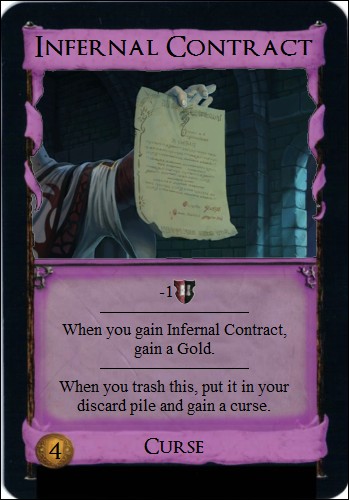
    Infernal Contract now gains you a curse if you attempt to trash it. This is to mitigate any trash-for-benefit schemes you might attempt with it.

    A new card that I am experimenting with. It probably needs an "if they did" clause for the copper, but this is still an early iteration of the card.

    I have finally conceded to criticisms, and increased this to 5 cost. Its flexibility does make it powerful, and I had fewer 5 cost cards than I'd like in the set anyways.

    Bookkeeper was tweaked slightly, in order to allow you to use any in your hand. Previously, if you drew more than one BK at a time, only one was of any use to you without a village.

    Doppelganger was tweaked, it is now $1 cheaper, but requires discarding a potion to gain a copy of the card. This is partially for balance, and partially for tracking problems. I read an article about how confusing it can be to have extra effects on throne room equivalent cards, and can understand how difficult it is to track a massive stack of effects; this should help limit the amount of extra effects that take place.

    Almoner was tweaked to eliminate the possibility of a Kings Court induced depleting of piles. It also helps limit the swinginess of an Almoner rush.