Thursday, 30 May 2013

Lenses - ways to evaluate your game

I have a book called The Art of Game Design: a Book of Lenses. The concept behind its lenses are different dimensions by which to measure your game or specific facets to examine independently about your game.

They have a very extensive, but not quite comprehensive list of ways to look at your game. It focuses mainly on video games, so I wanted to add a few that I have thought of that are more applicable to board games:

Lens of Cost - If you are going to produce something worthwhile to a consumer, you need to be able to provide them value for their money. This requires both that you make something worthwhile, and regulate costs.

  • How much does my game cost to manufacture? 
    • Will I be able to produce and sell it at sufficient volume to reduce manufacturing costs?
  • What components add value to my game?
  • Is there anywhere I can reduce costs associated with my game without compromising it?
  • Are there any components I can improve on without increasing costs or that would provide more value than they cost?
Lens of Speed - The pace of the game is very important, especially if there are periods of time when one or more players do not have anything to do.
  • How much down time is there per full round of player turns?
  • Is there something engaging to do or plan while waiting for other players?
  • What are players spending the most time on? 
    • Can that time spent on it be reduced?
  • Are any aspects of the game causing Analysis Paralysis?
  • Are there any aspects of the game I can remove to speed things up?
I like these lenses because they focus on Efficiency. Ultimately, you want to provide maximum enjoyment per dollar, and per minute of gameplay. It often helps to examine your game in a single dimension like this, and then decide which dimensions are the most important for what you are aiming for.

Lens of Intuition - Players new to this game need to be able to quickly grasp the rules, objectives, and strategy of the game in order to appreciate it initially. 
  • How long does it take to explain to a new player before they are comfortable to play it?
  • Is it similar to something they already understand?
  • Is there an easy way to distinguish a good move from a bad one?
  • Can any of the aspects be changed to something the player would understand better?
That last point I am toting from experience. In Shadows of Japan, what is current called Gold was then called Influence Points. It was bad. People kept confusing it with Political Power, and no one could seemingly grasp exactly what it did for them. By simply changing the name, everyone intuitively understood it and no explanation was needed for something that previously caused enormous amounts of confusion.


Thursday, 9 May 2013

"Please Don't Kill Me" Games

There is a certain subgenre of games that irk me. I will call them "Please don't kill me" (PDKM) games for the purpose of this article.

Essentially, they offer player interaction, but the only meaningful thing you can do with other players is screw them over; selectively. There are no teams, and every player is out for himself. This tends to turn the game into a game of grudges, and dogpiling the person in first place.

This really annoys me as a gamer and as a designer. I can remember many games where my strategy was just to essentially play "multiplayer solitaire" (or turtle, depending on the game) and divert attention from myself. It is very counterintuitive to actively punish players for doing well, and tends to promote "safe" (aka boring) gameplay. I also dislike it because it promotes "metagaming" where you do not play the game, you play the players, and old grudges and biases will haunt you. As someone who typically does well in games, "Please don't kill me" games tend to make me feel like a target.

A few examples of games that fit into this category:

  • Munchkin - By far the worst for this, players hoard nasty cards until a player hits level 9, then players essentially remain there until the group collectively runs out of punishments. I actively dislike this game for that exact reason.
  • Rattus - Not nearly as bad for it, this fits mainly in regards to player roles. If a player can sit on 2-3 roles for most of the game, it is very unlikely he will lose, however if (like me) a player continuously gets his roles stolen, he doesn't really stand a chance of winning.
  • Smallworld - Smallworld fits this pretty much to a tee; however for some reason however, I never seem to mind it as much in this game. Smallworld just seems to have a particular brand of magic that, no matter how much players screw each other over, no one gets mad about it.
  • Risk - This is pretty much why Australia is the best continent. But really though, why would you ever play Risk when there are so many better games available?
There are a lot of different ways to avoid PDKM syndrome.
  • Cosmic Encounter avoids this trap by the cleverly designed Destiny Deck. Whenever you are to make an attack, you draw a card to determine which player you attack. In addition to the standard player cards, there are also special cards that target players meeting certain conditions (e.g. fewest lost ships, most foreign colonies). It also helps that losing your own planets is not overly punishing.
  • Axis and Allies remedies Risk's flaws by forcing predetermined teams.
  • Dominion's attacks hit every opponent, so that you cannot actively pick on a given player.
  • King of Tokyo actually made a solution out of a problem, integrating this into its core gameplay, allowing confident players to become the "King" and take on everyone else
  • Many eurogames don't let players directly attack each other, and only indirectly interfere with each other (by building a road or train route first, or buying key commodities up before they can).
  • Shadows over Japan uses a combination of hidden knowledge and limited actions to keep players from each others' throats. The opportunity cost to attack another player is quite high, requiring you to reveal one of your ninjas, and potentially reveal your allegiance, as well as spending precious actions to move into position and attack. I think it is rather clever, though maybe I'm biased ;)
Until next time,

-Colin


Thursday, 25 April 2013

W(h)ere

W(h)ere is a game about a family of wolfweres that is an action-adventure game that serves as a more mature addition to the genre. It is a slightly older design of mine, but I will try and walk you through it. The main character is a wolfwere, who was separated from his pack (family) and brought to a strange island; he is brought from his forest to a laboratory on a remote island. The enemies are mostly animals, with humans introduced later on, and you use a variety of techniques to defeat your enemies and solve puzzles, taught to you by your other family members trapped on the island.


The game takes place in the third person perspective, it uses gritty violence and is in the adventure/RPG genre. The plot is essentially a quest for the family of wolfweres to escape the military lab and return home. Throughout the game, you learn new techniques taught to you by your escaped relatives. The game is played like most of its genre, only with the twist of being mature. [other games of its genre include Super Mario 64, Banjo Kazooie Series, Donkey Kong 64, etc.; just a clarification] The main world is the island, it is surrounded by water and is inescapable by traditional means. The various levels are caves, laboratories, ships, and other landforms and structures. They are only accessible in chronological order, with objectives and bonuses to each one.


Initially, combat is rather simple, with only a few basic attacks and weak enemies. Later on, however combat gets very interesting when you are fighting the military humans armed with guns, stealth becomes a large factor, deception and tactics become very important. The more advanced techniques require collectable tokens, accumulated throughout the levels. Those techniques are required to advance past later obstacles.
This game is essentially aiming at a more mature audience that grew up with the classics; there is a significant shortage of games of this genre and next to none in the mature range, with obvious implications. It is also a realistic sci-fi game though it might be called fantasy, also another scarce realm. It touches a number of untapped genres, combined with unique characters, solid gameplay, good graphics, immersive environments, and an involving storyline promises to be a significant title in the evolution of games.


The objective of the game is to escape the island laboratory with your pack. That is accomplished by rescuing your family members throughout the game, then sneaking on board a military ship as it is leaving the island (due to an evacuation order). A long series of events leads up to this point, and is caused by multiple conditions that were all triggered by the player.


Wolfweres
Wolfweres are similar to werewolves (hence the name) with the critical difference that they are wolves for most of every month, they then turn into humans on the night of the new moon. Their wolf anatomy is slightly off from a normal wolf, they have ball-and-socket shoulders, and there is some sexual dimorphism; females have a thicker patch of hair on their back, often called their mane, which is often slightly off color from the rest of their hair. Wolfweres have dark and thick hair, a large head with a significant jaw. They have a short tail, and mostly solid colored hair. Wolfweres have cat-eyes, with a vertical slit for a pupil. The Wolfwere lifespan is approximately one third of a human’s, a good approximation of an equivalent age is simply to multiply the wolfwere’s age by three. Wolfweres are omnivores, they have significant food sources in both the plant and animal kingdoms. On the night of the new moon, they become full fledged humans, though many of them have unique hair patterns which are hereditary; they do not shave while in human form [as they would end up with strange bald spots when they returned to wolf form], they still retain their language, though they are much less proficient at speaking in human form. 

Wolfwere Culture
Wolfwere culture revolves around their clans, basically branches of a family that travel as a pack; working together to hunt, forage, raise young, and perform the various jobs life throws at them. When one from outside the family joins a clan, they are referred to as an Invited, though they are not officially invited until they bring a new member to the family. A clan typically has between eight and sixteen members, the oldest generation of which is referred to as Elder, of which there are only two; the alpha and their mate. The position of alpha is not defined clearly, it is not based on gender or age, and is not even necessarily stable between the two Elders; the alpha position often changes between them.
Wolfweres are named after animals that have common personality traits with, though they often have prefixes added depending on their order of birth. Firstborns are called Senior, secondborns have no title, Thirdborns (or Finalborns) are called Little. It is rare for a family to have more than three children, and as such third born children are named as the last. Only children are given the title of wise, it is referring to the fact that they will be better off not having siblings to compete against. It is not actually much of a benefit, but the title remains after the myth was dispelled.
Wolfweres who have no direct blood relationship refer to one another as siblings; brother or sister depending on gender. Wolfweres with direct blood connection refer to one another with the appropriate titles. It should be noted that their language is not translated literally, and many of the words are the closest english approximations to the wolfwere language. The invited mate of a sibling is referred to as a near-brother or near-sister, the wolfwere equivalent of an in-law; this applies to all relationships, near-daughter or near-son, with the near addition for each.
Wolfweres travel by the season; they cross the equator and move into the opposite hemisphere during winter, and as such they never see snow, but know of it from folklore. This movement is called the great migration, and was originally started to keep them alive during the freezing temperatures of winter combined with their frail human bodies, though they do not stay in the equatorial region permanently as they live in forests and could not survive long-term on the little food in the area.
Wolfwere language is based on barks, growls, and smells. It is customary to exchange scents upon meeting an unknown wolfwere. Most of their communication is barks, there are a wide variety of syllables and as such messages can be sent in only a few barks. Growls express emotion more than words, though they often deliver a much clearer message than words ever could. Not all growling means bad things, they can mean good feelings as well as bad, though the baring of teeth is more often a snarl than a smile.

Wolfwere Characters

Note that Anaris is the main character
Name: Anaris (Little Spider)
Sex: Male
Age: 7 (equal to ~20 human years)
Eye Color: Yellow (wolf form) / Brown (human form)
Hair Color: Dark Brown
Name Significance: Little refers to the fact that he is the youngest of his siblings, spider is making reference to the species, who are known amongst the wolves for their intelligence and resourcefulness, as they have the ability to create complex webs seemingly out of nothing.
Distinguishing Marks:
Human: has a mane down his back and a thin beard, thinning out to middle.
Wolf: fairly unremarkable as far as wolves go. He starts off smaller than average, then gets larger as the game progresses; just to make it more interesting. Size based on max health.
Background: Anaris grew up with his family as most do, moving with the seasons and hunting animals as a pack. He has a strong relationship with his family, especially his siblings. Him and his brother both joke at their animal names, “spin a web brother spider” countered by “fly away brother bird”. His relationship with Alarid is also strong, they make a competition out of everything and work well together.

Name: Sicaris (Senior Bird)
Sex: Male
Age: 10 (equal to ~30 human years)
Eye Color: Hazel (both forms, though more yellowish in wolf form)
Hair Color: Black
Name Significance: The senior refers to the fact that he is the firstborn in his generation. Bird is referring to his good nature towards his siblings, as birds are known for their parenting due to the trouble birds go through to support their young.
Distinguishing Marks:
Human: Long hair on head, facial hair only small beard near mouth and moustache (lovingly called his beak)
Wolf: Sicaris is known for his size, as he is larger than most.
Background: Sicaris took it upon himself to play a major role in raising his brother and sister, he has a strong relationship with each. He takes his responsibility as Senior seriously and will go to extreme efforts to help them.

Name: Alarid (White one)
Sex: Female
Age: 8 (equal to ~25 human years)
Eye Color: Pink
Hair Color: White
Name Significance: Alarid’s name is fairly obvious, she is called the white one because she is an albino.
Distinguishing Marks: Alarid is easily recognizable due to her white color, as she is an albino. As such, she does not change form on the new moon (see Wolfweres), and is well known for both these attributes.
Background: Alarid has a strong relationship with her brothers, as they were raised together. She takes it upon herself to ‘defend the pack’ on the night without a moon (see Wolfweres) as one in wolf form can fight much better than a human. Her unique attribute is often subject to the jokes of her brothers, though she has an equal number about their human appearance.

Name: Delaris/Ancut (Senior Hawk/Elder)
Sex: Male
Age: 27 (equal to ~80 years)
Eye Color: Lime (wolf form) / Green (human form)
Hair Color: Graying Black
Name Significance: The Ancut title refers to the fact that he is the eldest of his clan (see Wolfwere culture) and is often used in place of his actual name. Senior refers to the fact that he is the oldest amongst his siblings, while hawk refers to his inquisitive nature and decisive action, as hawks watch carefully then swoop definitively.
Distinguishing Marks:
Human: Elder has long graying hair, which he usually ties back. He has a gray beard, which is short, except for a goatee. He has a large scar over his left eye, and has a medium build.
Wolf: Elder is easily spotted due to his larger than average size as well as his coloration, though he can be further identified by the distinct scar over his left eye.
Background: Delaris is the elder of his clan, and as such knows how to make Charms and is the only one who can teach you to use them. The distinct scar on his eye is a reminder of the encounter with Balaris’ bear.

Name: Maltarid (Wild Rose)
Sex: Female
Age: 18 (equal to ~55 human years)
Eye Color: Yellow (Wolf form) / Brown (Human form)
Hair Color: Brown
Name Significance: Wild rose is referring of course to the plant, as she is beautiful but deadly (as roses have thorns). It is also said that she wore a rose in her hair as a human, and that contributed to her name (and why she was named after a plant and not an animal)
Distinguishing Marks:
Human: Maltarid has light brown hair and very little body or facial hair, though the hair on her head is unusually long (comparative to other wolfweres’ human forms)
Wolf: Maltarid is typical in appearance, though her brown fur is notable. Her mane is darker than the rest of her hair (see Wolfweres)
Background: Maltarid is known for her double-faced attitude, she will be a rose one minute and a thorn the next; she is quite straightforward and her husband keeps her under control. Being an Invited (see Wolfwere culture), she has a weak relationship with Balaris’ parents.

Name: Balaris (Wise Bear)
Sex: Male
Age: 19 (equal to ~60 human years)
Eye Color: Hazel (both forms, though more yellowish in wolf form)
Hair Color: Dark Brown
Name Significance: Wise is a title given to only children, while bear refers to his personality. He is practical, strong (of heart and body), and resourceful; which are all traits associated with bears.
Distinguishing Marks:
Human: Balaris has thick hair on his head, back of neck and shoulders. It is not long, but is very visible (~1”). He is well built and has an under bite.
Wolf: Balaris has thick, black hair around his shoulders, is fairly large, and has a white coloration on his right ear.
Background: Balaris was a troublemaker when he was young, likely the reason he is an only child, though had some sense knocked into him after having his life saved by Delaris, in an encounter with an actual bear.

Name: Leterid (Little Mouse)
Sex: Female
Age: 28 (died at age 23, 5 years ago)
Name Significance: Little refers to the fact that she was the third and final child in her family, Mouse refers to her personality, as she is resourceful and caring, traits associated with mice.
Background: Leterid is well remembered for being a strict but loving mother, and adds with pride that she finally straightened out Balaris’ mischief. She died due to a disease that her aged body could not fight off.

Name: Felimaris (Wise Lion)
Sex: Male
Age: 35 (died at age 24, 9 years ago)
Name Significance: Wise is a title given to only children, Lion refers to his personality. He was proud and strong, loved his family and defended them fiercely; all traits associated with lions.
Background: Felimaris is remembered for his pride and strength, as a clan leader to aspire to, and his seemingly effortless methods of keeping others on track. He died of old age.

Name: Olarid (Little Monkey)
Sex: Female
Age: 9 (equal to ~25 human years)
Eye Color: Green (wolf form) / Blue (human form)
Hair Color: Light Brown
Name Significance: Little refers to the fact that she is the third and youngest among her siblings, while monkey refers to her personality. She is curious and energetic in her pursuits of knowledge, a trait associated with monkeys.
Distinguishing Features:
Human: Olarid has a rare trait, she has red hair in human form. She is rather hairless, except for moderately long hair on her head.
Wolf: She has lighter hair than most, as well she has a distinct petite form. Her mane is slightly darker than the rest of her hair. (see Wolfweres)
Background: Olarid was raised in a different clan, her parents and siblings taught her everything they knew and answered her every question, but could not satiate her curiosity. She met Sicaris by chance, when they were both hunting the same deer. She has a weak relationship with Sicaris’ family, though better with his siblings than parents, as they now hunt in fours.
The family tree.

Non-Wolfwere Characters
Note that these do not actually have names, as your character cannot understand English, but their names are based on their phonetic interpretation by the wolves (and given a small spin in the process)


Name: Samaris (Samurai/Sameul)
Sex: Male
Personality: Materialistic, cold
Appearance: short blond hair, gray suit, blue eyes
Age: ~45
Position: Head of Research
Significance: Serves as a boss, as well is responsible for the experiments done on your family


Name: Karmarid (Dr. Cameron)
Sex: Female
Personality: Caring, inquisitive
Appearance: long blond hair, thin-framed glasses, white lab coat,
Age: ~25
Position: Scientist: Animal Care Specialist
Significance: She is the one who ‘carelessly’ let out Alarid, she helps out you on a few occasions [like g-man does in half-life], because she feels bad for you because of the unpleasant experiments done on the wolfweres.

Opening Cinematic
In the opening cinematic, your pack is hunting some deer, when a strange noise comes from the side, it sounds like thunder (gunshot). The deer flee, and your hunting efforts are in vain. Suddenly, a group of newmoons (humans) emerges from the bush, covered in a strange greenish fur (camouflage clothes), Elder asks the newmoons what is happening, they panic and point their staves (guns) at Elder and a dart hits him. The other wolfweres see this and move to attack the newmoons, then more come and fire at the pack. You are hit in the neck and black out as the chaos continues. (fade out)
You wake up in a large metal cage, in a white-metal room with two newmoons grunting excitedly, in white fur. //[these wolves are a new species! They may not even be wolves!][what do you mean?][their DNA is unlike anything I’ve ever seen before, look at these isotopes][isotopes? You mean they have radioactive blood?][not quite, it seems to be oriented to change based on radiation in the environment.][they have unstable blood?][we’re not sure, it’s unlike anything anyone has ever seen before. The specimens are being held for further study](barking from cage)//“what is going on? Newmoon brothers, help me out of here!” (scientists look over, grunting incomprehensible jargon [english])//[he’s woken][we should get him sedated and back to storage](fire a tranquilizer into the wolfwere)//“brothers, what are you doing?” (fade to black)

Plot?
I have a plot written that flows through a series of levels, however this post is already very heavy on text. As such, I will include it in another post.

Thursday, 28 February 2013

Chaos and Determinism in a Game

This article will attempt to answer the question "How much should luck play a factor in my game?". I will explain both ends of the spectrum and weigh the benefits and drawbacks of each. It will also discuss the various methods of introducing chance into your games.
Determinism has the following benefits:

  • Makes for a very intellectual game
  • With sufficient testing, allows for a high level of play
  • Players feel encouraged to improve at the game, rather than blame bad luck for a loss
  • At sufficiently high levels of play, beautiful strategies will emerge
  • Experienced players can play very quickly in familiar scenarios
And the following drawbacks:
  • Tends to encourage Analysis Paralysis (AP)
  • Is not approachable for new players; having a skilled friend tends to scare people away
  • Requires an understanding of the game to appreciate it
  • Has a significant learning curve
  • Is discouraging if you do not feel that you are learning while you play
  • Tends to only work with fewer players (usually only 2)
Chaos has the following benefits:
  • Allows for diversity of play, by having unlikely scenarios emerge
  • Chance is faster than decisions - if you let players choose, they will take time to think about it, even if it isn't very important. Leaving things to chance allows you to improve the speed and flow of the game
  • It allows players of disparate skill levels each enjoy a chance of victory
  • It can, in some cases, intensify the player interaction experience
  • It forces you to react to things as they happen, rather than plan infinitely in advance
And the following drawbacks:
  • It is insanely frustrating to lose because of bad dice rolls
  • If there is too much chance involved, player skill becomes irrelevant
  • It is difficult to tell if a strategy is good or bad when it could just be the luck
  • Can occasionally cause AP by adding additional possibilities to the outcome
  • Will usually result in a runaway leader when more people are playing
  • Generally favours more casual games; is generally unable to support a high skill-ceiling
  • Often requires large scale to normalize its odds

Ultimately, one is not strictly superior to the other. In most cases, a balance of the two will provide the best outcome; giving them a game-plan, but still requiring them to keep on their toes. Depending on the nature of your game, and your own personal preferences, you may want to lean one way or the other.

Methods of Uncertainty
Dice
Dice are pure chance. They can be good to you, or betray you when you need them most. You can use a single dice to maximize the randomness, or use multiple dice to weigh the odds (example: both 3D6 and 1D20 have the same average roll, but you are more likely to roll 'average' numbers with 3D6).  Their unpredictability is their strength and weakness, and pretty-much embody the pros and cons of Chaos. You can also include coin flips as dice, as they are essentially a D2.
Cards
Cards are my preferred method of chance. They are easily malleable, as you can add or subtract possibilities, and each will happen throughout the course of the deck, normalizing the outcome. I feel that they are an excellent balance between Order and Chaos. You can also store large amounts of information per card (relative to the other mediums). Things like tiles from Carcassonne would also be included as cards. You can also manipulate the cards, allowing you to do things like search the deck, or add or remove cards from it at will.
Hidden Information
This is most notable in Stratego, Shadows over Japan, and Old Maid. Allow each player their own hidden pieces, and have other players react not knowing which is which. It adds a certain amount of metagame to it, imposing mind-games between you and your opponents. It also adds a touch of skill in reading your opponents and knowing how they think. It is not technically random, but it is uncertainty, which for all intents and purposes is the same thing.

This can also include hidden information that is not known to any player. The best example that I can think of this is from Clue, where players have to figure out which clues were set aside at the beginning of the game.
Dexterity
I generally frown on this one for board games, but it includes anything that requires you to physically accomplish a task. Examples of this include Crokinole, Operation, and Jenga. It generally works if it fits your theme, but isn't something I'd consider to be strategic in any way; generally lending itself better to casual, family, or comedy-oriented games.
Judgement
This is another one I'd frown upon, but having a GM or other neutral party judge/choose an outcome can be a valid method in some circumstances. This is generally most applicable to story-telling games, where the scoring might be determined either by a central judge or a panel of the other players.

An example of this would be Cards Against Humanity, which actually supports both Judge (Card Czar) and Jury (God is Dead) scoring systems.


Be sure to choose the best methods for your mechanics, although in many cases it is more a question of preference than precision.

Until next time,

-Colin


Thursday, 21 February 2013

The Importance of Theme

Theme is an interesting aspect to games; more often than not, they are the make-or-break factor that will determine its success. I also have a slightly unique perspective on this, as I personally enjoy theme less than most.

Firstly, let's define theme. In its broadest sense, it is anything that makes the game immersive. Themes can be tacked on, or core to the game. Take Super Mario Chess for example. The game itself is no different from regular chess, however, they are marketing it on the hope that involving Mario will generate more sales. That is a tacked-on theme. Something like Twilight Struggle has theme at its core; it starts at the core and builds outwards. Everything about that game is based on the cold war, including all of its mechanics and content. There are also mixed cases, such as Carcassonne, which could just as easily be about building a dungeon as a city, or could just as easily be an abstract control-the-colours game.

Visuals

Closely tied in with Theme is Art. It is easy to underestimate the importance of having good art. I was genuinely surprised for most of my Magic playing career, how many people got into it because of the art. It was something I generally didn't care about or even notice, and yet it is a major drawing factor for many of its players (no pun intended).

Art is the bridge between the every-man and the game. It is very difficult to appreciate abstract games without playing them and having an understanding of it. It is easy to appreciate something relatable; Warhammer thrives on this concept. While it could very well be an abstract strategy game, it instead takes place in a very engaging universe filled with interesting characters and stories, that ultimately have very little to do with the actual gameplay. I admit to have started playing Warhammer without any prior knowledge of it, instead just basing the decision purely on its aesthetics.

Audio

Unless you are talking about a video game (or Last Night on Earth), music is not a factor. That being said, I find that sound is far more important than graphics for creating immersion. Music is good, but sound effects and voices are far more important.
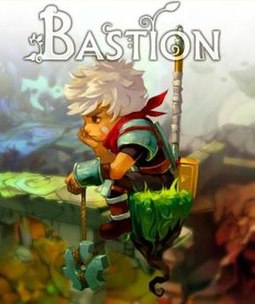
Taking two examples, Bastion is nothing special graphically; however it has a ridiculously amazing soundtrack, and exceptionally good voice acting. Dungeon Keeper 2 is a very old game, with terrible graphics by modern standards, however I find it easy to get into because of the beautifully done voice acting and sound effects.

I also want to make note of the original Fear game; for most of it, a very annoying high-pitched sound is constantly emitted. It is fairly easy to ignore after a minute, but it does keep you from getting psychologically
relaxed.

Story

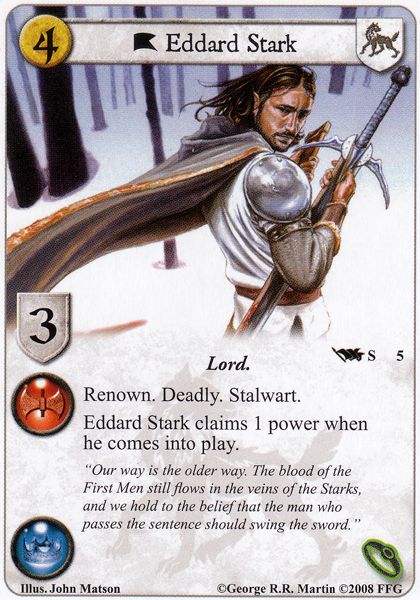
Depending on the game, there may be a universe associated with it. I mentioned the Warhammer universe, which guides the game without directly affecting it. Having relatable stories and characters (or a franchise) associated with your game is often a boon, and indeed the sole saving grace of most shovelware. It becomes more engaging to pit Eddard Stark against Joffrey Baratheon when you know the backstories of those characters.
Many games have engaging stories within themselves, and indeed are the beginnings of such universities or franchises. In some cases, the line between story and game becomes blurred, and experiencing the story becomes more important than the gameplay itself. Note however, that some games lend themselves better to storytelling than others. Typically, long games can have more of a story, while shorter games tend to have a 'flavour' more than an actual story. By this I mean, in Carcasonne, you are a builder competing for contracts to create this city - and that is the extent of the story.

Conclusion

Theme is an important aspect of gaming, as it helps to draw in players and make the game more engaging. More is generally better than less, so long as you are not just tacking it on. Fluff is great to have, but not essential. It can also occasionally make things easier to explain as well, if your mechanics are tied into your theme, as everyone has an intuitive understanding of such things as gold.

Until next time,

-Colin

Thursday, 7 February 2013

How to Balance a Game


How should you go about balancing a game?

There are a few schools of thought to this. The predominant answer that I have found is that it depends on the nature and genre of the game.

PVM

As a rule of thumb, when designing a PVM (player versus monster) game, the idea is to go big or go home. Does a certain boss feel too easy? Try doubling his stats. PVM focuses mainly on feel, and as such, minor refinements and tweaks tend not to make a huge difference. Many developers have ended up doubling those stats again.

Experiment with a wide variety of values, and see what 'feels' right. These types of games are mostly about the experience, rather than showcasing a particular mechanic. If something is not working exactly how you want it, consider just not emphasizing that element in the game; by this I mean if the jumping mechanic in your game is awkward, you have two options:
  1. Refine your jumping system until you have something smooth
OR
  1. Just don't include any jumping puzzles
Is jumping really important to your game? Do you really need to refine it, or can you simply ignore it? Most PVM problems can be solved by altering the CONTENT of your game rather than its MECHANICS.

PVP

If you are designing a PVP game, refinement becomes much more important. Monsters may not mind that a particular spell or combo is overpowered, but when game-breaking combos are unleashed on other players, they tend to take offence.

Generally speaking, many of your more vocal testers (or players) will complain about whatever beat them to the point that you have to take their words with a grain of salt. It is also important to consider both sides of an argument, sometimes powerful units are necessary and intrinsic to a balanced matchup. I personally don't like Marauders in Starcraft, but I acknowledge that the game would not be the same without them.
Rock is OP. Paper is fine.
-Scissors
This is comparing the balancing philosophies behind WoW, DotA, and LoL.

Depending on whether or not you are designing a video game (and indeed what system you are designing it for), you may or may not have the luxury of patching your games; that is to say, fixing anything after the initial release. Patching is usually not required, unless you are aiming to have an extremely high level of competitive play, although it is fairly standard among video games nowadays.

I maintain the opinion that what Blizzard is best at is Patching games, outstripping every other game producer  by far in that regard. Every single patch in Diablo 3 was a godsend, after a fairly poor initial reception. Starcraft is widely considered the best balanced RTS in history, after years of updates and feedback from their community. I can't personally speak for WoW, but I feel that its 10 million+ population speaks for itself.

If you do not have the ability to patch your game, then you had best make sure that you get it right the first time. Donald X. Vaccarino playtested for over a year and played thousands of games before the first release of Dominion.

You need to consider every element, and its every possible interaction with every other element in order to claim to have fully tested something. A daunting task, and it is usually best to have as many testers as possible for a project. Usually, you want smart/skilled players, who will notice possible interactions quickly, and therefore test much more efficiently than simply brute-force testing every possible interaction. You should generally balance for as high-level play as possible.

PVP games must have both well balanced MECHANICS as well as CONTENT. The only regard that it is more flexible than PVM is that human interaction can naturally balance out minor things.

Is one element really powerful? Have players bid on it; this helps to ensure that whoever gets it has to pay whatever everyone feels that it is worth.
Is there potential cooperation among the players? Alliances or cooperation allow underdogs to topple a dominant player.


Thursday, 17 January 2013

An Analysis of Pokemon

I, am a fan of Pokemon; however, I feel that Nintendo mishandled the franchise.

The series started with its humble beginnings with the Original Generation of 150 Pokemon; it was fantastic. They did a good job of introducing variety, so that players could build varied and interesting benches based on what they were interested in. Although most veteran players can agree on a choice few Pokemon that formed the "ideal" end-game bench, the cute Pokemon are what drew in a lot of players, and it does help to have a variety of units, even if not all of them are useful. The anime series was well received, and it was an overnight success.

Where I feel that Nintendo misstepped was in how they handled subsequent generations. In the second generation, they added 100 new Pokemon. The only ones that remained from the first generation were ones that had new evolutions in this version.


I feel that they would have been much better off to treat each new generation as an expansion pack for the series, rather than feeling they needed to reinvent the entire ecology of Pokemon for every generation. I would have liked to see maybe 50 new pokemon, and cycle out 50 of the less popular pokemon, resulting in a significant number of new faces, as well as a host of familiar ones, and only 50 new ones to learn, rather than having to start from square one. This also has the benefit of making it not unreasonably hard to 'catch them all', the underlying motto of the series.

In subsequent generations, they misstep again and again. They add 135 new Pokemon in generation 3 (for a total of 385), and again, reinvent the wheel. They added in Leaf Green and Fire Red, remakes of the original generation. I feel that this would have been a great time to consolidate the three generations into something manageable, as the Running Shoes alone made the remakes worth buying, however instead, they stood largely alone, not really affecting the series as a whole in terms of Pokemon biodiversity.

The fourth generation, Diamond and Pearl, adds 107 new pokemon, bringing us up to 492. By this point, it would take a truly dedicated Pokemon master to catch them all, and they are starting to run out of reasonable shapes for their Pokemon, resulting in slightly ridiculous varieties, or species that are derivative of previous Pokemon.

In the fifth generation, Black and White, we add 156 more, for a total of 648. While there is no denying that the game has improved mechanically with each game's iteration, it can equally said that the endearing quality of the Pokemon themselves has diminished with each generation. Beyond the starters and the legendaries, how many Pokemon can you actually name? - and more importantly, how many do you actually care about from the newest generation? 

I feel that Nintendo would have been better off cycling out a smaller portion of each generation, and retaining more Pokemon from generation to generation, allowing favourites to remain a part of the franchise (aside from Pikachu of course, who never seems to go away). By forcing players to learn over a hundred of new Pokemon each time they want to pick up a new game, and virtually guaranteeing that their favourites will not be in the next one, they are isolating a lot of their core fan base. 

Pokemon games are still fun, and it is good to see them experimenting with new formats and inter-generational mingling. Games such as Pokemon Conquest are refreshing, and promising for the future of the franchise, as it has become abundantly clear that their current path is not the correct way to continue. I still enjoy Pokemon, but I haven't been very interested in them lately because there are just too damn many of them.

Until next time,

-Colin Souva